
Learn how much movers cost in the UAE, including pricing factors, apartment size, distance, services included, and tips to plan your moving budget.
Self Storage: Definition, How it Works, Types and Uses
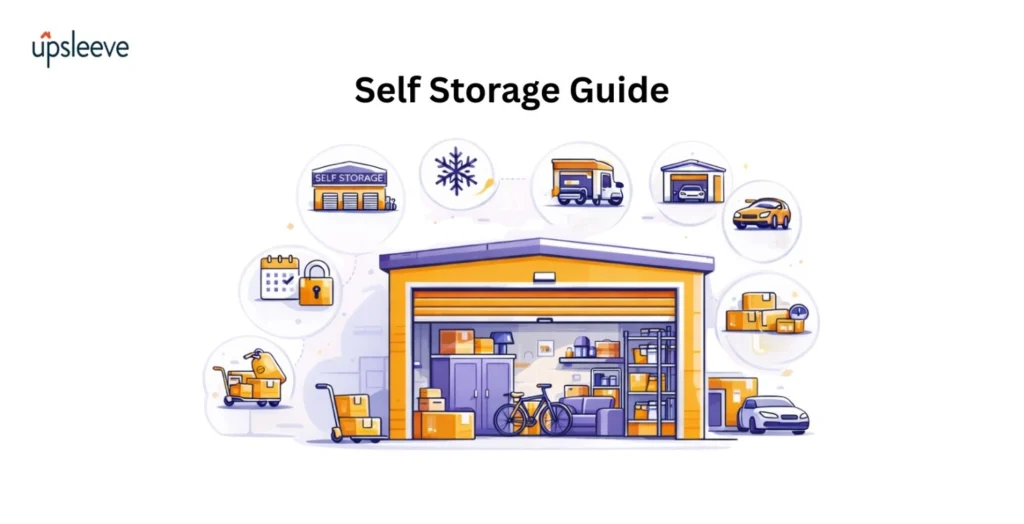
Self storage is a storage service of storage facilities which provides individuals and businesses rentable storage units to store, organize, and manage their belongings. The storage facilities provide self storage units which are secure, lockable, and accessible spaces. Renters are allowed to manage self-storage units flexibly on a month to month basis using self-managed storage access with personal locks for privacy and full control.
Individuals and businesses can store their essentials in self storage units by selecting a convenient location, and comparing the facilities based on their safety, reputation and features. You also need to consider your items’ total volume to choose the appropriate sized self-storage units. The storage facility will reserve a specific type of self-storage unit when you have reviewed security and operational features and signed a rental agreement.
Self storage facilities offer various unit types, including climate-controlled, drive-up, indoor, and outdoor units for different customer needs such as moving, home renovations, decluttering, business inventory storage, seasonal items, document preservation, vehicle parking, or college storage. These self storage units will store your items for one week to several decades, it depends whether you are storing your items for short-term or long-term. Short term self storage lasts for 1 month to 6 months while long term storage duration goes beyond 6 months.
People use self-storage units for extra space, security, flexible rental terms, and climate-controlled storage options. Key features include surveillance cameras, gated access, personal locks, drive-up access, loading docks, and moving truck services. Monthly rental rates range from AED 300 to AED 3,000 depending on unit size, location, and required features. The Federal Tax Authority applies 5% VAT on self-storage services in the UAE, so quoted rates are either VAT-inclusive or VAT-exclusive. Dubai Civil Defence and Abu Dhabi Civil Defence enforce the UAE Fire and Life Safety Code of Practice, prohibiting the storage of hazardous, flammable, or illegal items such as explosives, firearms, gasoline, chemicals, perishable food, and controlled substances.
What is Self Storage?
Self storage is a storage service that provides secure, rentable storage units to individuals and businesses to independently store and manage their belongings on a flexible, month-to-month basis. It allows renters either individuals or businesses and facility operators, to manage how and when items are stored, accessed, and removed.
Self-storage’s users adjust space according to their needs by upgrading, downsizing, or ending the rental with rental notice as it operates on a month-to-month rental basis without long-term contracts. The self-managed storage access helps renters secure their own units with personal locks to maintain full control and privacy. These self-storage units provide adaptable solutions for people navigating transitions, reorganizing living or working environments while protecting possessions, and managing operational workflow.
What Is a Self Storage Unit?
A self storage unit is a secure, lockable, and accessible rented space within a storage facility that individuals and businesses use to independently store and manage their belongings under flexible terms.
How Does Self Storage Work?
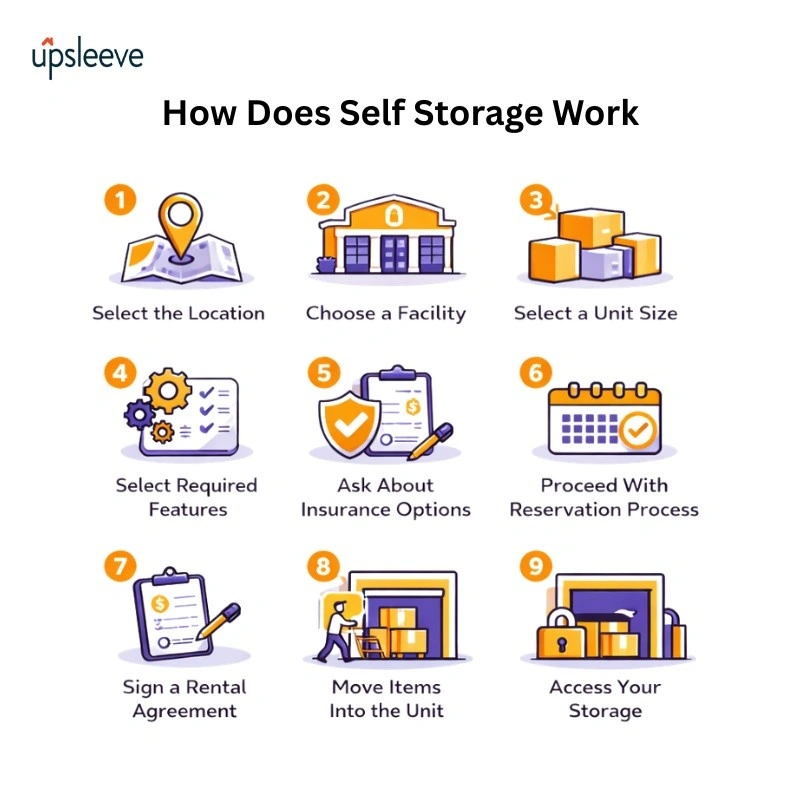
Self storage works in a structured process in which renters select the location near their home or business, compare different storage facilities’ reviews, reputation, safety standards and cleanliness and select the one which fulfills your storage requirements.
You need to consider the volume of your belongings to choose the required unit sizes, security considerations, and operational features like climate control, drive-up access versus indoor units, elevator availability, and advanced locking systems. It is recommended to make sure that storage facility has proper insurance coverage to protect against financial loss due to unexpected events, such as fire, flooding, theft, vandalism, or natural disasters.
You can reserve storage units either online or in person and sign a rental agreement after confirming the deposit requirements. It’s time to move your items into the unit and adjust the security and availability features according to your requirements.
1. Select the Location
Start by evaluating location near to your home or business, along with convenient access to major roads or highways for easier transportation. Some customers prioritize nearby secure options for convenience, while others may choose slightly distant but more affordable facilities depending on budget and frequency of visits. Most UAE storage facilities are present in industrial zones such as Al Quoz, Dubai Investment Park, Jebel Ali, and Ras Al Khor in Dubai, and Mussafah in Abu Dhabi. Residential demand for these facilities comes primarily from communities including Dubai Marina, Downtown Dubai, JBR, Business Bay, JVC, Al Barsha, Arabian Ranches, Dubai Hills, and Mirdif. Facilities with direct access to Sheikh Zayed Road, Al Khail Road, and Emirates Road reduce transit time between residential communities and the storage site.
2. Choose a Facility
Next, compare each self storage facility based on reviews, reputation, safety standards, and cleanliness so that it meets your expectations. You can consider Upsleeve as it offers self-storage units designed with modern security systems, accessible layouts, and professionally managed environments to provide a reliable storage experience.
3. Select a Unit Size
Choose a storage unit from a variety of unit sizes (small to large) depending on the volume of your belongings, such as mini self storage options, a 5×10 self storage unit for apartment contents, or a self storage 10×10 for larger needs. You can review visual size guides and contact customer support to better understand square footage and determine the most suitable unit.
4. Select Required Features
Check important security and operational features of self-storage facilities such as climate control, drive-up access versus indoor units, elevator availability, and advanced locking systems. You should select the facility which offers surveillance, gated access, proper lighting, biometrics, smart locks, and other secure self storage measures to ensure locked self storage protection.
Storage facility security features in Dubai fall under the Security Industry Regulatory Agency (SIRA), which licenses self-storage operators and sets technical standards for CCTV coverage, access control, and monitoring systems. Requesting a valid SIRA certificate from the operator before booking confirms that the facility meets these security standards. Fire safety systems at UAE storage facilities connect directly to the relevant civil defence authority. Dubai facilities link to Dubai Civil Defence through the Remote Monitoring System, while facilities in other emirates connect to Hassantuk, the Ministry of Interior’s national alarm receiving centre, enabling real-time fire alerts and emergency response.
| City | Average Piano Moving Cost |
|---|---|
| Dubai | AED 800 to AED 1,800+ |
| Sharjah | AED 550 to AED 2,400+ |
| Ras Al Khaimah | AED 200 to AED 500+ |
| Abu Dhabi | AED 500 to AED 1,500+ |
Planning a Move? Let the Experts Handle It
From home moves to office relocations, our professional movers ensure safe packing, timely transport, and stress-free moving. Get expert help today.
Get a Free Moving Quote5. Ask About Insurance Options
Ask about insurance coverage to protect against financial loss due to unexpected events, such as fire, flooding, theft, vandalism, storms, or other natural disasters. It is recommended to explore facility-provided insurance plans, third-party insurance, or whether your homeowner’s or renter’s policy extends coverage, and carefully review coverage limits and exclusions.
The storage facility’s liability insurance covers the building and its operations, not the renter’s stored goods. A separate tenant contents policy or written endorsement is required to protect items inside the unit against fire, theft, and damage. Typical UAE storage insurance policies exclude humidity-related mold, gradual deterioration, cash, and jewellery. Insurers reject claims where prohibited items stored in the unit contribute to the reported loss, making a pre-storage inventory and contents declaration a necessary step before signing the policy.
6. Proceed With Reservation Process
Reserve your unit either online or in person once you’ve selected the right storage option. You have to confirm deposit requirements and inquire about any promotional discounts or special offers that may reduce initial costs.
7. Sign a Rental Agreement
Carefully review and sign the rental agreement for your storage unit, paying attention to lease terms (month-to-month vs. long-term), payment schedules, due dates, late fees, and facility rules. These terms protect you from legal issues such as disputes over unpaid rent, liability for damages, or breach of contract, and provide clarity regarding responsibilities like maintaining unit security and proper use of the facility. Confirm whether the quoted rent is VAT-inclusive or VAT-exclusive, as the Federal Tax Authority applies 5% VAT to self-storage services in the UAE. Request a VAT-compliant tax invoice showing the operator’s Tax Registration Number before signing the agreement to support accurate financial record keeping.
8. Move Items Into the Unit
Pack items securely using protective materials such as covers and bubble wrap, and clearly label all boxes for easier organization. You should use carts or trolleys to move heavy items into the unit safely, arrange items strategically to maximize space, and keep frequently accessed items near the front. Maintaining a simple inventory list helps track stored items and manage space efficiently.
9. Access Your Storage
Confirm the facility’s access hours even if 24-hour access is available. You should also check the entry methods, such as PIN codes, keys, mobile apps, biometrics, or smart locks, to understand how you can enter your unit.
What Are the Types of Self Storage?
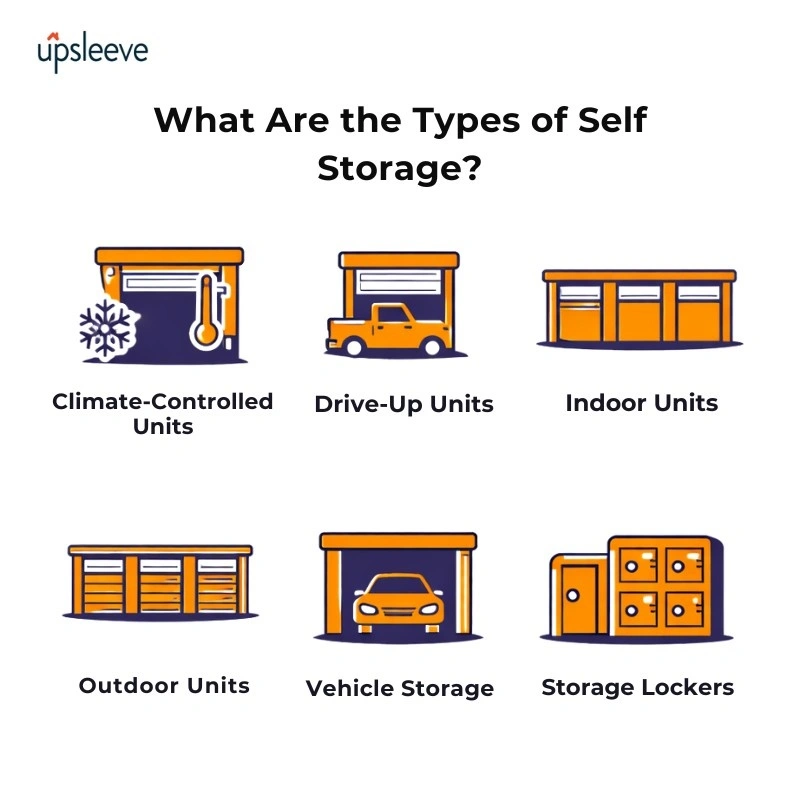
The most important types of self-storage are climate-controlled self storage units, drive-up self storage units, indoor self storage units, outdoor self storage units, vehicle self storage units, and self storage lockers.
Climate-Controlled Self Storage Units
Climate-controlled self storage is a type of storage space that maintains regulated temperature and humidity levels inside climate-controlled units. These units help protect belongings from extreme heat, cold, and moisture which reduces the risk of mold, mildew, warping, and material damage. These features make climate-controlled self-storage units ideal for electronics, wooden furniture, antiques, important documents, and artwork stored in a secure storage facility.
UAE outdoor temperatures exceed 45°C from June to September, and coastal humidity in Dubai, Sharjah, and Abu Dhabi regularly passes 60%, peaking above 90% during the hottest months. These conditions make standard non-climate-controlled units damaging to heat-sensitive and moisture-sensitive stored items. Climate-controlled self-storage units in the UAE maintain an internal temperature range of 18°C to 24°C with humidity held below 60%, directly countering the outdoor heat and moisture levels that cause warping, mould, and material deterioration.
Drive-Up Self Storage Units
Drive-up self storage units are ground-level storage spaces that allow direct vehicle access to the unit door for convenient loading and unloading. These self storage drive up units are especially practical for moving heavy items such as bulky furniture or business inventory without navigating hallways or elevators. Drive-up self storage units are ground-level storage spaces that allow direct vehicle access to the unit door for convenient loading and unloading. These self storage drive up units are especially practical for moving heavy items such as bulky furniture or business inventory without navigating hallways or elevators.
Indoor Self Storage Units
Indoor self storage units are storage spaces located within an enclosed building rather than outside. They provide added protection against weather exposure and theft with controlled entry systems and surveillance monitoring.
Outdoor Self Storage Units
Outdoor self storage units are accessible from outside the building, similar to drive-up units, that allows easy vehicle access. They are suitable for storing large items such as bulky furniture, industrial equipment, and vehicles, and are generally more cost-effective than indoor units
Vehicle Self Storage Units
Vehicle self storage units are dedicated storage spaces designed specifically for cars, motorcycles, RVs, and boats. These units may be fully enclosed indoors, covered outdoor spaces, or uncovered parking areas, offering both short-term and long-term options with varying security features.
Self Storage Lockers
Self storage lockers are compact storage spaces intended for smaller quantities of belongings. They are affordable and space-efficient, making them ideal for documents, seasonal items, and personal possessions. They typically offer limited capacity and rely on simpler locking mechanisms compared to larger units.
What Are the Use Cases of Self Storage?
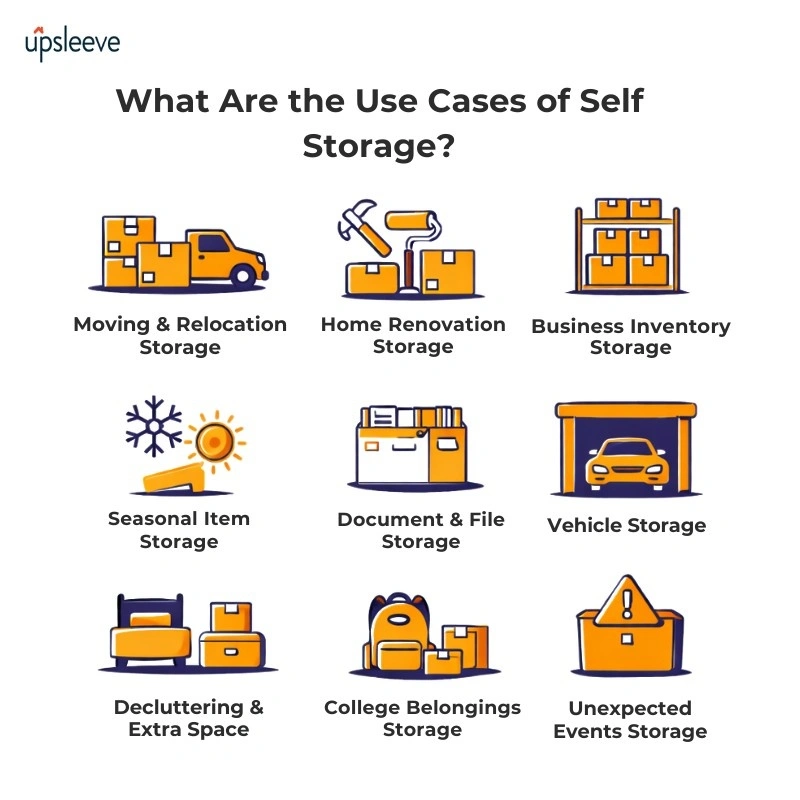
Self storage offers flexible units for a variety of purposes that includes protecting business inventory, storing seasonal items, keeping important documents and files, parking vehicles, storing college belongings during moves or relocation, safeguarding items during home renovations, decluttering your home, and managing excess household or office items.
Moving and Relocation Storage
Self storage offers secure temporary space during local or long-distance moves that helps bridge gaps between move-out and move-in dates. It is also useful when downsizing before relocation or preparing a property for home staging that allows homeowners to store excess items while maintaining an organized space.
Home Renovation Storage
People store furniture and valuables during renovations, to prevent exposure to dust, debris, mold, theft, or accidental damage caused by contractor work to protect your belongings while remodeling activities are underway.
Business Inventory Storage
Businesses use self-storage units to manage e-commerce products, store excess retail inventory, and handle seasonal stock overflow. These units also provide secure space for important documents, equipment, and tools, helping businesses stay organized and protect their operations.
Seasonal Item Storage
Self storage is commonly used for holiday decorations, winter clothing, summer gear, and sports equipment that are not needed year-round to optimize living space while protecting seasonal belongings from climate-related wear and damage.
Document and File Storage
Storage units are often used to preserve legal, medical, and financial records in a controlled environment. They support paper preservation and act as a secure file backup solution and offer protection against theft, damage, or natural disasters.
Vehicle Storage
Self-storage units offer secure parking solutions for cars, RVs, boats, motorcycles, and trailers, including options like indoor boat storage. These facilities protect your vehicles from harsh weather, theft, and vandalism, while providing flexible short-term or long-term storage that frees up valuable home or business space.
Decluttering and Extra Space Storage
Self storage helps individuals temporarily store unused or seasonal belongings such as clothing, holiday decorations, sports equipment, books, or furniture. This makes it easier to downsize, reorganize living areas, and optimize apartment or home space for daily-use items.
College Belongings Storage
College students use storage units to safely keep belongings such as clothing, books, electronics, furniture, and sports equipment during summer breaks, study abroad programs, internships, or moves between shared apartments. This allows them to avoid transporting items long distances between semesters and ensures their possessions remain organized and secure.
Unexpected Events Storage
Self storage becomes essential during emergency relocations caused by unexpected events such as natural disasters (floods, fires, storms), eviction, or sudden job transfers, as it provides a safe and accessible place to protect belongings when homes or usual locations are unavailable or at risk. It is also commonly used during personal crises like divorce transitions or managing an estate after the loss of a family member.
What Is the Duration of Self Storage?
The duration of self storage starts from a minimum of 1 week to several decades with no maximum limit. However, the short term storage is defined as 3 months or less and long term storage refers to any period over 3 to 6 months.
Temporary Storage
Temporary storage refers to brief rental periods lasting from one week to several weeks, making it ideal for immediate transitional needs such as moving-day gaps, home staging, or short renovation projects. These arrangements usually involve flexible contracts, quick access, and minimal paperwork to ensure convenience during urgent situations.
Short-Term Storage
Short-term storage generally covers periods from a few weeks up to 6 months and commonly operates on month-to-month rental agreements. It is well suited for seasonal item storage, temporary relocation, or ongoing renovation projects where flexibility is important.
Long-Term Storage
Long-term storage typically extends from 6 months to several years and is ideal for preserving business archives, storing off-season vehicles, or supporting extended relocations.
How to Select the Right Self Storage Unit for Your Needs?
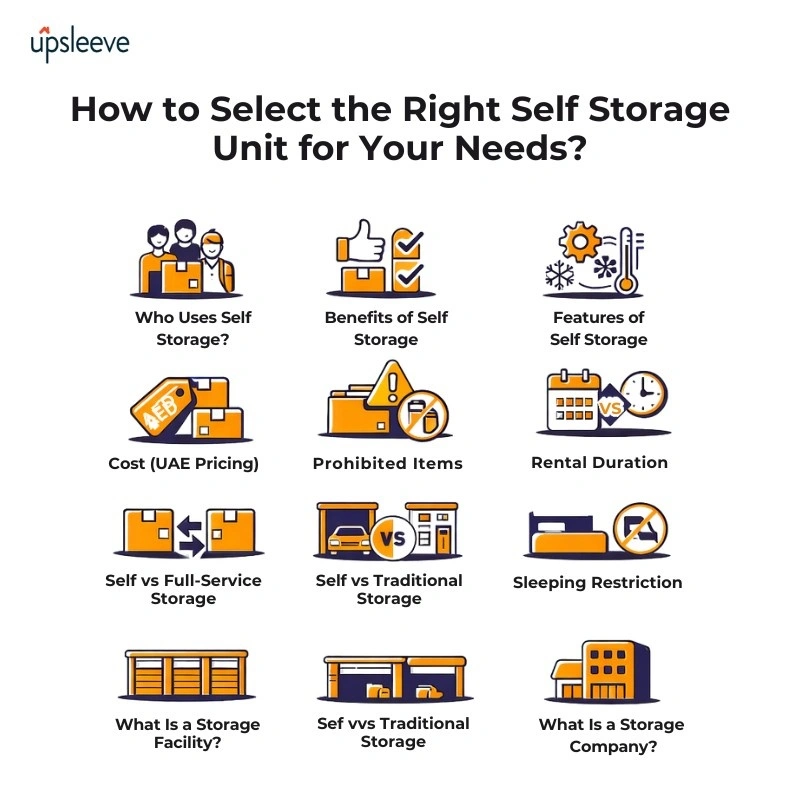
To select the right self-storage unit for your needs, you should check the location proximity, choose the perfect size, consider climate control features of self-storage, check for security features, and compare pricing. You should also analyze the facility condition and read reviews of the previous clients to select the right self storage unit for your needs.
1. Check Location Proximity
Choose a facility close to your home or business to ensure easy and frequent access. You should prefer the self-storage which has convenient highway connectivity that will also save time and transportation costs.
2. Choose the Perfect Size
Select a unit size based on the volume and type of items you plan to store to avoid overpaying for unused space. You can estimate the correct square footage by reviewing size guides or consulting staff.
3. Check for Climate Control Features
Consider a climate-controlled unit if you are storing sensitive items like electronics, wooden furniture, or documents. These temperature and humidity regulations help prevent moisture damage, mold, and material deterioration.
4. Check for Security Features
Look for strong security measures such as surveillance cameras, gated access, proper lighting, and advanced locking systems. The secure access controls of self-storage help protect your belongings from theft and unauthorized entry.
5. Check Facility Condition
Inspect the cleanliness, maintenance standards, and overall condition of the property. A well-maintained facility reflects professional management and reduces the risk of damage to stored items.
6. Compare Pricing
Review rental rates, deposit requirements, and any additional fees before committing. You will find a balance between affordability and features by comparing pricing across facilities.
7. Check for Reviews
Read customer reviews and ratings to understand real user experiences. You should consider the self-storage reliable if they have positive feedback regarding security, service quality, and transparency.
Who Uses Self Storage?
Individuals and businesses use self storage, as it provides flexible rental units for personal/business use to manage space efficiently. Homeowners, renters, college students, and families often rely on storage during moving, renovation, decluttering, or life transitions, while businesses such as e-commerce retailers, contractors, real estate agents, and small enterprises use it to store inventory, tools, equipment, documents, or seasonal stock.
Expatriate residents drive most self-storage demand in the UAE due to frequent tenancy changes, job relocations, and extended home country travel. Bridge storage covers the gap between a move-out date and a new lease start date. Summer storage serves residents who travel home between June and August and need secure space for furniture and belongings during their absence. Exit storage holds belongings for residents completing their end-of-service period before departing the UAE.
What Are the Benefits of Self Storage?
Self storage provides extra room for belongings, helping individuals and businesses free up valuable space while improving organization, enhancing security, and offering flexible, climate-controlled, and conveniently accessible storage solutions.
Benefits of self storage are written below.
1. Extra Space for Belongings
Self storage provides extra room for belongings, helping individuals and businesses free up valuable space at home or in the workplace without selling or discarding important items.
2. Improved Organization
It improves organization by allowing you to store seasonal, excess, or infrequently used possessions in a dedicated unit.
3. Protected Storage Environment
Self storage also offers protected storage environments with monitored access, gated entry, and modern locking systems to keep items safe.
4. Flexible Rental Arrangements
These flexible rental arrangements allow customers to rent for short or long durations based on their needs.
5. Climate-Regulated Units
Climate-regulated units help preserve sensitive items from heat, cold, and moisture.
6. Convenient Access Hours
The convenient access hours of self-storage further ensure that stored belongings remain easily retrievable whenever required
What Are the Features of Self Storage?
Self storage provides secure, convenient, and flexible solutions with features like monitored access, drive-up or loading dock options, climate-controlled units, and extended access hours.
Features of Self Storage are given below.
1. Surveillance and Security
The features of self-storage include surveillance cameras, gated access, and personal locks that provide controlled and monitored security for stored belongings.
2. Drive-Up Access
These self-storage facilities offer self storage with drive-up access for convenient loading and unloading.
3. Loading Dock Options
Self storage with loading dock options is available for larger commercial needs.
4. Moving Truck Services
Additional features may include self storage with free moving trucks or self storage with moving truck services to simplify transportation during move-in.
5. Office Space
Some self-storage locations provide self storage with office space for added convenience.
6. Climate-Controlled Units
Climate-controlled units help protect sensitive items from extreme temperatures and moisture.
7. Flexible Rentals
Flexible month-to-month rentals are offered to suit varying storage needs.
8. Extended Access Hours
Extended access hours allow customers to retrieve or store belongings at convenient times.
9. Well-Lit Premises
Well-lit premises enhance safety and visibility within the storage facility.
How Much Does Self-Storage Cost in the UAE?
Self-storage in the UAE typically costs AED 300 to AED 3,000+ per month, depending on size, location, and features. Small units (~25 sq ft) range from AED 300-400, medium units (50-75 sq ft) cost AED 895-1,450, and large units (100-160+ sq ft) range from AED 1,500-3,000+ in major cities like Dubai and Abu Dhabi.
Rates vary based on location (central areas like Al Barsha or Downtown Dubai cost more than DIP or Mussafah), climate control and 24/7 access, and a mandatory 5% VAT added to the base price. Budget options include shared storage (AED 100-150 cheaper), box storage (from AED 75-99 per month), and facilities in Sharjah or Ajman, which are often 10-20% cheaper than Dubai for long-term rentals.
Abu Dhabi storage rates in Mussafah and Khalifa City align closely with mid-range Dubai prices for equivalent unit sizes. Ras Al Khaimah and Fujairah offer lower long-term monthly rates for customers who accept the added travel distance. Storing outside Dubai reduces monthly rent but adds fuel cost and moving truck time to each visit. Comparing the full round-trip access cost against the monthly rental savings determines whether a cheaper emirate facility reduces or increases the total storage spend.
What Items Are Prohibited in Self Storage Units?
Self-storage units prohibit hazardous, flammable, perishable, or illegal items, including explosives, firearms and ammunition, gasoline, chemicals, perishable food, and illegal drugs. These items are restricted because they pose fire, health, or legal risks and could endanger people, property, and the facility. The restrictions are enforced by local authorities such as the Dubai Civil Defence and Abu Dhabi Civil Defence, and storage operators must comply with these regulations to maintain a safe and lawful environment under the UAE Fire and Life Safety Code of Practice, which sets the classification and handling rules for flammable and dangerous goods across the emirates.
How Long Can You Rent a Storage Unit?
You can rent a storage unit for a maximum of an unlimited period, as most facilities allow you to keep the unit for months, years, or even decades as long as payments are maintained and facility rules are followed. Self-storage units typically have a minimum rental period of one month, though some providers may offer weekly terms. Most facilities operate on month-to-month rolling contracts that automatically renew until you give notice, usually within 10–30 days, and long-term tenants may receive incentives such as discounts or a free month for extended commitments.
What Are the Differences Between Self-Storage and Full-Service Storage?
The differences between self-storage, warehouse storage, and portable storage lie in their access, management, location, cost, flexibility, security, and suitability for different use cases.
The differences between self-storage, warehouse storage, and portable storage are given in the table below.
Factor | Self-storage | Warehouse storage | Portable storage |
Access | Direct, anytime by the renter | Managed by the facility on request | On-site during loading, then limited |
Management | Self-managed by the client | Fully managed by the provider | Client loads, provider transports |
Location | Fixed facility unit | Provider’s warehouse facility | Delivered to client’s location |
Cost | Low to moderate | Moderate to high | Moderate |
Flexibility | High – rent by the month | Moderate – contract-based | High – delivered on demand |
Security | Client-controlled lock | Facility-managed security | Container lock, varies by provider |
Best for | Personal items, decluttering, moving | Business inventory, bulk goods | Renovations, temporary on-site storage |
What Are the Differences Between Self Storage and Traditional Storage?
The differences between self storage and traditional storage are mainly in access, control, and service structure. Self storage renters have direct, flexible access to their units and manage the packing, moving, and organization themselves, often on a month-to-month rental basis. This storage model emphasizes independence, convenience, and cost-effectiveness.
Traditional storage, such as warehouses or off-site commercial storage, typically involves facility staff handling storage, limited access hours, and longer-term lease commitments. It often provides less flexibility and control for the customer compared to self storage while offering professional handling and bulk storage solutions.
Can You Sleep in Self Storage?
No, you cannot sleep in a self-storage unit because it is not designed or legally permitted for living. These units lack essential features such as ventilation, plumbing, fire safety systems, and basic living amenities. Sleeping or living in a unit is prohibited by facility rules and local regulations, and doing so may result in eviction or legal consequences.
What Is a Self Storage Facility?
A self storage facility is a commercial property that provides secure, rentable storage units for individuals and businesses to store their belongings. These facilities offer features such as gated access, surveillance, climate-controlled units, and flexible rental terms, allowing customers to manage and access their items independently.
What Is a Self Storage Company?
A self storage company is a business that owns and operates self storage facilities, providing individuals and businesses with secure, rentable units. It manages the facility’s operations, including security, maintenance, customer service, and rental agreements, while offering flexible storage solutions to meet various needs.
Self-storage companies in the UAE hold a trade license issued by the relevant economic authority in the emirate of operation. Dubai-based operators are licensed through the Department of Economy and Tourism (DET) and operate from commercial or industrial zones rather than residential buildings. Abu Dhabi operators get a license through the Department of Economic Development, and Sharjah operators are licensed through the Sharjah Economic Development Department. Confirming the operator’s trade license before signing a rental agreement verifies that the facility operates as a registered self-storage business in the UAE.
Related Articles
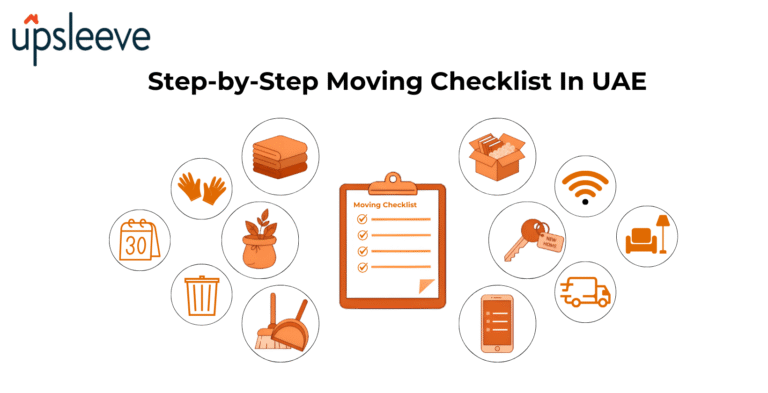
Use a complete moving out checklist to plan, pack, notify utilities, clean, inspect your property, avoid delays, and ensure a smooth, stress-free move.
Learn what relocation means in the UAE, its main types, costs, and a clear step-by-step guide to relocate smoothly with legal, housing, and moving tips.

Discover 12 benefits of hiring professional movers and packers in the UAE, including safe packing, faster moves, cost savings, insurance, and stress-free relocation.
Ready to Move?
Get Your Free Quote
Today
We make moving simple, safe, and stress-free. Our professional team handles everything from packing to delivery with care and precision.
- Professional packing & unpacking services
- Fully insured and licensed movers
- Same-day & next-day availability
- Free, no-obligation estimates
Request a Quote
Fill out the form below and we’ll get back to you as early as possible.