
Learn how much movers cost in the UAE, including pricing factors, apartment size, distance, services included, and tips to plan your moving budget.
Freight Forwarder vs Broker: Which Is Better for Your Shipment?
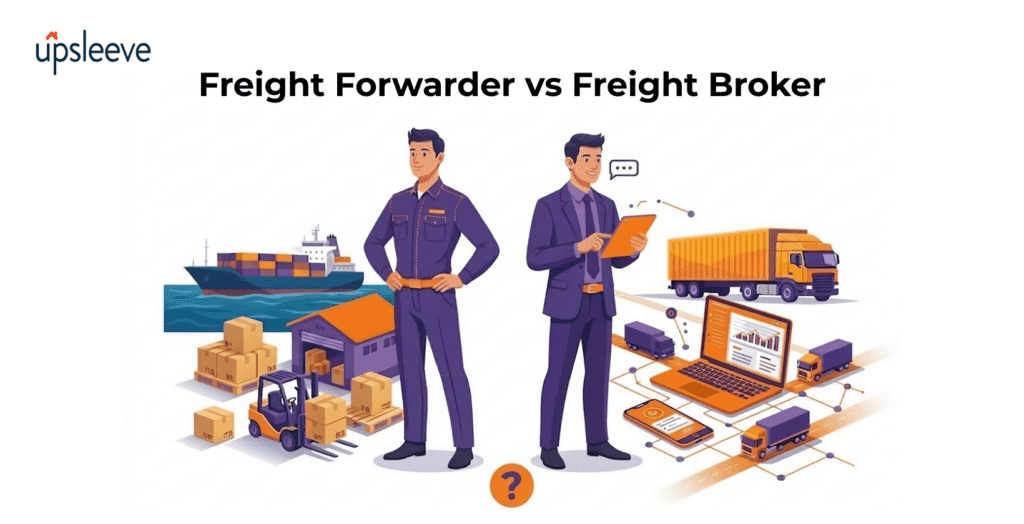
Freight forwarders manage shipments by handling cargo movement, documentation, customs coordination, and transport arrangements for domestic and international moves from the UAE. Freight brokers arrange shipping by connecting shippers with approved carriers and coordinating schedules and rates, without taking physical control of the goods.
Shippers often struggle with delays, cost overruns, or compliance gaps when the wrong service type is used for the shipment, so shippers, importers, and exporters need to understand the differences between freight forwarders and brokers. Freight forwarders offer end-to-end control and compliance management, reducing operational risk but increasing costs, while brokers provide flexible, cost-effective coordination without handling the cargo, which allows businesses to optimize budgets and schedules.
Freight forwarders suit international moves because they manage customs, documentation, and multimodal transport, while freight brokers fit straightforward shipments where carrier coordination and lower costs matter more.
What Is a Freight Forwarder?
A freight forwarder is a logistics service provider that coordinates the complete movement of goods from UAE warehouses to domestic and international destinations by managing container bookings, shipment tracking, and delivery schedules. It handles customs paperwork, export declarations, and carrier coordination for overseas shipments while arranging trucking, consolidation, and local transport for domestic moves.
Domestic trucking operations managed by freight forwarders across the UAE require heavy vehicle permits from the Roads and Transport Authority (RTA) in Dubai and the Integrated Transport Centre (ITC) in Abu Dhabi. Oversized or over-dimensional cargo requires additional route permits, and freight forwarders ensure compliance with RTA truck movement restrictions on key corridors such as Sheikh Zayed Road during peak hours.
Freight forwarders deliver timely and secure cargo movement across all routes by directly overseeing operations, consolidating shipments, and arranging multimodal transport rather than simply connecting clients with carriers.
Freight forwarders in the UAE provide temporary storage solutions and handle careful packing for international shipments using sturdy cartons and shrink wrap, palletization, and protective packaging techniques like foam inserts and cushioning to prevent damage during transit. They also provide customers with guidance on shipping costs, port fees, insurance, and required certifications for full compliance with both UAE regulations and destination-country rules.
Which UAE Ports and Airports Do Freight Forwarders Operate Through?
Freight forwarders in the UAE operate through 4 primary gateways for international cargo. Jebel Ali Port, operated by DP World, processes sea freight as the largest container port in the Middle East. Khalifa Port serves Abu Dhabi sea cargo under AD Ports Group, with Port Rashid handling supplementary sea operations for Dubai. Dubai International Airport (DXB) and Al Maktoum International Airport (DWC) process air freight shipments entering and leaving the UAE. The Dubai Logistics Corridor connects Jebel Ali Port, Jebel Ali Free Zone (JAFZA), and DWC as a single customs-bonded area, reducing sea-to-air cargo transfer times across these 3 linked hubs.
What Is a Freight Broker?
A freight broker is a transportation intermediary who arranges shipments between shippers and carriers by coordinating schedules and securing rates without taking physical possession of the goods. It communicates with multiple carriers, negotiates transport fees, and makes sure pickup and delivery timelines are met for both domestic and international shipments. Freight brokers also provide a streamlined logistics service by managing documentation, carrier selection, and shipment tracking while clients retain responsibility for the freight itself.
Freight brokers in the UAE use relationships with multiple carriers to secure competitive shipping rates and consistent availability for their clients. They also help with efficient operations of trucks and cargo carriers by matching shipments with carriers’ schedules, reducing empty trips, and maximizing fleet utilization.
What Are the Differences Between a Freight Forwarder and a Freight Broker?
The differences between a freight forwarder and a freight broker lie in their roles and responsibilities, services offered, regulations and licensing, cost comparison, and limitations. Freight forwarders take physical control of shipments, manage end-to-end logistics, and incur higher costs and limitations due to the complexity of their operations. Brokers, on the other hand, act as intermediaries connecting shippers with carriers without handling cargo directly, resulting in lower costs and fewer operational constraints.
Roles and Responsibilities
Freight forwarders take physical possession of cargo and manage the shipment from UAE warehouses to domestic or international destinations. Their roles include coordinating with customs authorities, preparing export documents, and scheduling pickups and deliveries with legal responsibility for timely and secure delivery at every stage.
Freight brokers act as intermediaries who connect shippers with carriers by identifying available trucks, vessels, or cargo space and negotiating rates based on shipment size and route. They maintain communication between shippers and carriers, confirm schedules, and coordinate logistics planning without ever taking physical control of the goods.
Services Offered
Freight forwarders’ services include storing cargo in secure warehouses, grouping shipments to optimize space, and booking container or air cargo slots directly with carriers while negotiating rates based on volume and route.
Bonded warehousing is a core service offered by freight forwarders licensed inside JAFZA or Dubai Airport Free Zone (DAFZA), allowing duty-free storage for re-export cargo. Goods moved from a free zone into the UAE mainland trigger the standard 5% import duty at the point of crossing. It makes bonded warehouse selection a direct cost factor for shippers handling re-export and mainland distribution simultaneously.
They also provide operational services such as assembling goods, packing with industry-grade materials and palletization, and preparing export documentation while coordinating with customs and carriers for timely delivery.
Customs declaration filing is a dedicated service offered by Dubai-based freight forwarders through Mirsal 2, the Dubai Customs electronic declaration platform, covering Import, Export, Re-export, Transit, and Free Zone Transfer declaration types. Abu Dhabi customs declarations run through the Advanced Trade and Logistics Platform (ATLP). Freight forwarders assign the correct Harmonized System (HS) code to each cargo item as part of the declaration process, using the Dubai Customs Integrated Tariff to ensure accurate duty assessment. Misclassification exposes shippers to duty reassessment, shipment holds, and fines.
Freight brokers’ services include connecting shippers with available carriers, coordinating schedules, and facilitating payments without handling the freight. They maintain communication between shippers and carriers for efficient and transparent operations.
Regulations and Licensing
Freight forwarders hold a trade license from the Department of Economy and Tourism (DET) in Dubai, formerly known as the Department of Economic Development (DED), or the equivalent Economic Department in other emirates. They also maintain higher cargo insurance due to their legal responsibility for the freight.
Mainland forwarders operate under a DET Freight Forwarding or Logistics Services activity, while forwarders operating inside free zones such as JAFZA, DAFZA, or Dubai South hold a free zone trade license. Every forwarder operating through UAE ports obtains a Shipping Agent Code from Dubai Customs via the Dubai Trade portal at dubaitrade.ae before handling cargo at Jebel Ali Port or DXB.
Forwarders secure these approvals by registering with local authorities, coordinating with insurance providers, and complying with UAE customs and transport regulations for domestic and international shipments.
Freight brokers register with the Department of Economy and Tourism (DET) in Dubai, or the equivalent Economic Department in other emirates, under a Freight Brokerage or Customs Broker activity, but carry no legal responsibility for cargo conditions. Brokers verify carrier credentials and facilitate contracts and payments between shippers and carriers. Licensed customs brokers among them obtain a Customs Broker Code from Dubai Customs through Dubai Trade, granting Mirsal 2 access for filing declarations on behalf of importers and exporters.
Cost Comparison
Freight forwarders generally incur higher operating costs because they manage warehouses, hire specialized moving personnel, and take on responsibility for handling and storing cargo. They also cover higher insurance and compliance costs for both domestic and international shipments, so their rates are higher.
UAE freight forwarders carry Freight Forwarders Legal Liability (FFLL) insurance as a standard compliance requirement, covering errors, omissions, and cargo damage. Marine cargo insurance applies to sea freight shipments, and goods-in-transit cover applies to road shipments, with liability assessed under the FIATA Model Rules.
Freight brokers operate with lower overhead as they focus mainly on licensing, technology platforms, and load boards to match shippers with carriers. They keep their costs low by coordinating shipments digitally, verifying carriers, and handling contracts and payments without taking physical control of the cargo.
UAE Value Added Tax (VAT) affects the final invoice from both freight forwarders and freight brokers. International transport of goods into or out of the UAE qualifies as a zero-rated supply under Federal Decree-Law No. 8 of 2017. Domestic freight between 2 points inside the UAE and brokerage service fees are standard-rated at 5% by the Federal Tax Authority (FTA). Shippers request VAT-compliant tax invoices that separate international and domestic legs to ensure accurate tax reporting.
Planning a Move? Let the Experts Handle It
From home moves to office relocations, our professional movers ensure safe packing, timely transport, and stress-free moving. Get expert help today.
Get a Free Moving QuoteLimitations
The limitations of freight forwarders include higher costs, operational complexity, and the need for specialized expertise. These factors can make managing shipments more challenging and increase the overall expense and effort for businesses using their services.
The limitations of freight brokers include limited control over shipments, unsuitability for international freight, and no legal responsibility for cargo. These limitations can restrict their usefulness for complex or global shipments and reduce accountability for the condition of goods.
How Do I Choose the Best Freight Broker or Freight Forwarder?
You can choose the best freight broker or freight forwarder by identifying your shipment needs, checking licensing and compliance, assessing the offered services, comparing costs and fees, evaluating experience and reliability, and determining the desired level of control and risk. You may request quotes and get offers after completing the previous steps, and make an informed decision accordingly.
1. Identify Your Shipment Needs
Start by assessing whether your cargo is domestic within the UAE or international, because international shipments require services like customs clearance, cargo consolidation, and detailed documentation, which freight forwarders can manage directly. A freight broker would be a better option for simpler domestic shipments as they coordinate transport schedules and connect with carriers without taking possession of the goods.
2. Check Licensing and Compliance
Check that your chosen provider meets all legal and regulatory requirements in the UAE. Freight forwarders should hold a valid logistics or freight forwarding trade license from the Dubai Department of Economic Development (DED) or equivalent Economic Department in other Emirates, relevant international shipping licenses, and sufficient insurance coverage to assume responsibility for the cargo. Freight brokers, while not responsible for the goods themselves, must be registered as a logistics or freight brokerage service with the Dubai Department of Economic Development or the relevant Emirate’s Economic Department.
3. Assess Services Offered
Evaluate the specific services each provider offers based on your shipment needs. Freight forwarders can store goods, adjust shipments, book cargo space, handle documentation, and negotiate transport rates directly with carriers, while freight brokers focus on connecting shippers with reliable carriers, managing logistics schedules, and facilitating payments without storing the cargo.
4. Compare Costs and Fees
Analyze the overall cost of working with each provider. Freight forwarders generally have higher operating costs due to warehousing, handling responsibilities, and legal accountability. Freight brokers usually maintain lower overhead costs, covering licensing, technology, and access to load boards, which makes them a more budget-friendly option for simpler shipments.
5. Evaluate Experience and Reliability
Evaluating experience and reliability confirms that your chosen freight provider has a proven track record of handling shipments in the UAE market. Freight forwarders with demonstrated expertise in international shipping, customs compliance, and cargo handling reduce the risk of delays, misclassification, and damage. Freight brokers with a strong carrier network and a record of coordinating smooth deliveries provide more consistent scheduling and rate options. Membership in the National Association of Freight and Logistics (NAFL), the UAE freight forwarding association headquartered in Dubai, confirms alignment with local industry standards. NAFL membership also carries affiliation with the International Federation of Freight Forwarders Associations (FIATA), signaling compliance with international freight forwarding standards. Air freight forwarders additionally hold an International Air Transport Association (IATA) accreditation, confirming authorization to handle air cargo bookings directly with airlines. Client reviews and past shipment records provide direct evidence of service reliability before committing to a provider.
6. Determine the Level of Control and Risk You Want
Consider how much control and responsibility you want your provider to assume. Freight forwarders physically handle shipments and assume legal responsibility to give you more direct oversight and accountability. Freight brokers, on the other hand, coordinate transport without taking possession, reducing your direct control but also limiting risk exposure in case of delays or damages.
7. Request Quotes and Compare Offers
Reach out to multiple providers to obtain detailed quotes for accurate price comparison across services and routes. You should compare the pricing, service inclusions, timelines, and any guarantees they provide. This step helps you compare full-service handling from freight forwarders with the lower-cost coordination offered by freight brokers.
8. Make an Informed Decision
Align your choice with the complexity, budget, and risk profile of your shipment for an accurate decision. You should choose a freight forwarder if you need experienced management, legal responsibility, and international expertise, or opt for a broker if you prefer efficient, lower-cost coordination for domestic or simpler shipments.
What Are the Benefits of Using a Freight Broker?
The benefits of using a freight broker are provided below.
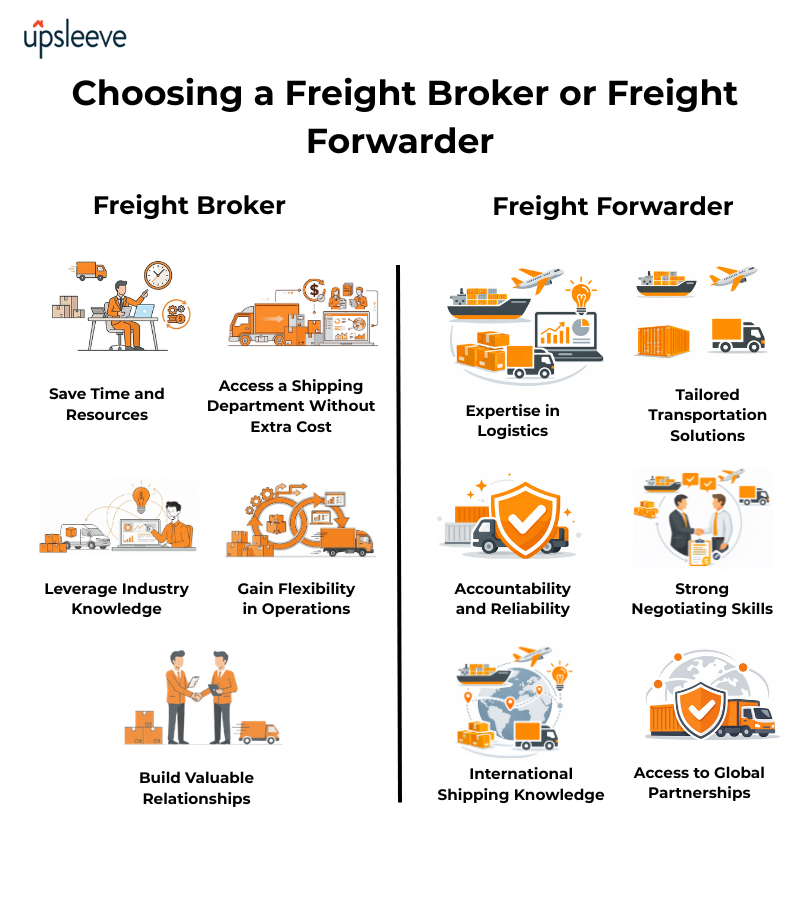
Save Time and Resources: Freight brokers reduce the effort, time, and manpower by connecting shippers with qualified carriers for reliable shipment coordination.
Access a Shipping Department Without Extra Cost: Freight brokers help businesses manage shipping without hiring in-house logistics staff or investing in systems by using their own licensed platforms, carrier networks, and rate-negotiation techniques.
Gain Flexibility in Operations: Freight brokers allow businesses to adjust shipping volumes and schedules quickly to meet changing demand by leveraging a network of carriers and brokers.
Leverage Industry Knowledge: Freight brokers use their experience and UAE market insights to recommend cost-effective routes, optimal carriers, and regulatory compliance solutions.
Build Valuable Relationships: Freight brokers connect shippers with trusted carriers through repeated collaboration to foster long-term partnerships that improve reliability and service quality.
What Are the Benefits of Using a Freight Forwarder?
The benefits of using a freight forwarder are described below.
- Expertise in Logistics: Freight forwarders manage complex supply chains by coordinating storage, transportation, and documentation through experienced carrier partners, customs agents, and port service providers.
- International Shipping Knowledge: Freight forwarders apply in-depth knowledge of UAE customs procedures, international shipping laws, and trade compliance requirements to prepare accurate documentation, meet regulatory standards, and prevent clearance delays or penalties.
- Tailored Transportation Solutions: Freight forwarders design shipment plans based on cargo type, destination, and urgency, combining air, sea, and land transport for optimal efficiency.
- Access to Global Partnerships: Freight forwarders secure reliable space and competitive rates for your shipments by using a network of carriers, ports, and warehouses.
- Strong Negotiating Skills: Freight forwarders negotiate transport fees, cargo space, and service terms on behalf of clients to achieve cost-effective and timely delivery.
- Accountability and Reliability: Freight forwarders assume legal responsibility for cargo during transit, providing insurance coverage, accurate documentation, and consistent monitoring throughout the shipment process.
Related Articles
Use a complete moving out checklist to plan, pack, notify utilities, clean, inspect your property, avoid delays, and ensure a smooth, stress-free move.
Learn what relocation means in the UAE, its main types, costs, and a clear step-by-step guide to relocate smoothly with legal, housing, and moving tips.

Discover 12 benefits of hiring professional movers and packers in the UAE, including safe packing, faster moves, cost savings, insurance, and stress-free relocation.
Ready to Move?
Get Your Free Quote
Today
We make moving simple, safe, and stress-free. Our professional team handles everything from packing to delivery with care and precision.
- Professional packing & unpacking services
- Fully insured and licensed movers
- Same-day & next-day availability
- Free, no-obligation estimates
Request a Quote
Fill out the form below and we’ll get back to you as early as possible.