

Learn how much movers cost in the UAE, including pricing factors, apartment size, distance, services included, and tips to plan your moving budget.
When Is the Best Time to Move in the UAE?

The best time to move in the UAE is during the winter months, especially from November to March, when the temperatures are mild, and moving is easily managed. If possible, plan your move for mid-month weekdays, as these days have better availability, smoother traffic, and more flexible scheduling. When considering the time of the day, start early in the morning, as it helps in handling your belongings safely and makes the move efficient.
The best time to move in the UAE is affected by several factors that include your lease or housing dates, seasonal costs, weekdays versus weekends, and mid-month timing. Weather conditions, work and school schedules, local traffic or events, and your personal readiness also play a big role in planning a smooth relocation.
Before choosing a moving date, take a close look at your lease or housing deadlines to avoid overlapping payments or penalties. Keep in mind that costs can vary depending on the season and the day of the week, so planning the time of your move strategically can save money. You should consider the weather, traffic, and your work or school commitments, which helps your move stay organized and efficient.
Best Moving Time By Seasons
The best season for moving in the UAE is winter because temperatures are mild, humidity is low, and outdoor conditions are comfortable for movers. Cooler weather allows for safer handling of furniture and reduces the risk of heat-related delays or fatigue.
Winter also avoids the extreme summer heat, which can limit working hours and slow down transportation. During the winter season, traffic is more manageable and moving demand is moderate, making scheduling easier and keeping your move efficient and on track.
Best Moving Time By Months
The best months for moving in the UAE are January, February, November, and early December because temperatures are cooler, humidity is lower, and movers can operate more efficiently. You can also benefit from safer working conditions, better scheduling flexibility, and fewer weather-related delays during these months.
Best Moving Time By Weeks
The best time to move by weeks in the UAE is mid-month, particularly during the second and third weeks. These weeks are less affected by salary cycles, lease renewals, and end-of-month pressure, which keeps mover availability higher and scheduling smoother. Demand remains more balanced, allowing better coordination and fewer booking delays. Traffic conditions also stay more predictable during this period.
Early-month and end-of-month weeks are usually busier because residents plan moves around paydays, contract deadlines, and school schedules. Public holidays and long weekends further increase demand, reducing available time slots and increasing rates.
Best Moving Time By Days
The best days to move in the UAE are Monday to Thursday because movers are more available, pricing remains stable, and scheduling is easier. These weekdays face less competition for time slots, which allows for smoother coordination and faster confirmations.
Traffic is generally more predictable compared to weekends, helping reduce delays during transportation. Friday has lighter traffic but stricter building access limitations while Saturday sees heavier movement because most residents plan their shift on this day.
Best Moving Time By Hours
Early morning hours are the most preferred time for moving in the UAE because temperatures are lower, humidity is manageable, and movers can load and unload more efficiently before midday heat intensifies. Along with morning hours, you should also consider late evening hours for smaller moves only when buildings do not have restricted night-time access, which makes early morning the safest and most reliable option. You can also consider heat management during the summer months, as working past noon increases fatigue, equipment strain, and the risk of delays in handling furniture.
Peak moving hours, such as 7-9 AM and 5-7 PM, slow down travel time and reduce mover availability, while off-peak hours windows allow faster transportation between locations. Midday hours are the least favourable because of extreme heat and limited outdoor working conditions, whereas early mornings offer optimal safety and maximum efficiency for loading and unloading.
What Factors Should You Consider When Choosing a Moving Date?
The factors you should consider when choosing a moving date are outlined below:
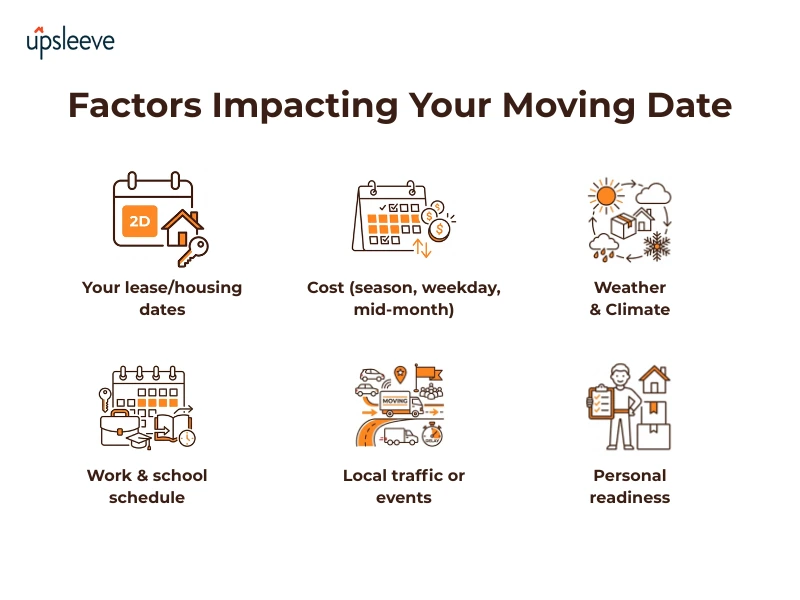
Your lease/housing dates: Lease start and end dates determine when you need to relocate and help avoid overlapping rent or penalty charges. When your moving date aligns with housing contracts, you stay organized and avoid last-minute pressure.
Cost (season, weekday, mid-month): You can expect moving costs to change based on the season, day of the week, and timing within the month. When you choose off-peak periods or mid-month dates, you usually pay lower mover fees and face fewer extra charges.
Weather and climate: You should consider weather conditions, as high summer heat or unexpected rain during transition months can slow down the moving process and increase safety risks. A cooler and more predictable climate allows you to manage loading, transport, and unloading more smoothly.
Work and school schedule: Work responsibilities and school calendars directly affect how flexible your moving plans can be. You should choose dates outside exam periods, school openings, or major work deadlines to reduce disruptions.
Local traffic or events: You should account for public holidays, city events, and peak traffic hours, as these periods often cause delays and longer transit times. When you avoid busy traffic windows and major events, your delivery schedule stays more predictable.
Personal readiness: You need to complete packing, organize your belongings, and prepare the required paperwork before your moving date. Adequate preparation reduces last-minute issues and allows the move to progress smoothly.
Is It Better to Relocate at the End of the Month in the UAE?
Yes, it can be better to relocate at the end of the month in the UAE as this period aligns with salary cycles, lease renewals, and tenancy turnovers. Movers are in high demand during the last week, which increases prices and limits available time slots, but early bookings help secure smoother scheduling and fair rates. Planning a move at the month’s end works well for tenants coordinating with contract deadlines while minimizing disruptions. However, we will recommend moving during the mid-months to avoid rushes.
| City | Average Piano Moving Cost |
|---|---|
| Dubai | AED 800 to AED 1,800+ |
| Sharjah | AED 550 to AED 2,400+ |
| Ras Al Khaimah | AED 200 to AED 500+ |
| Abu Dhabi | AED 500 to AED 1,500+ |
Planning a Move? Let the Experts Handle It
From home moves to office relocations, our professional movers ensure safe packing, timely transport, and stress-free moving. Get expert help today.
Get a Free Moving QuoteIs Winter Moving Dangerous or Inconvenient?
No, winter moving in the UAE is neither dangerous nor inconvenient as temperatures are mild, humidity is low, and outdoor conditions are ideal for loading and unloading. Movers work efficiently in winter without the risks associated with extreme heat, and traffic conditions remain manageable compared to peak summer congestion. Winter provides a comfortable, safe, and reliable window for relocating, which makes it one of the most convenient seasons for moves.
When Do Movers Charge the Least in the UAE?
Movers in the UAE charge the least during off-peak seasons and mid-month periods when demand is lower, and scheduling is easier. Peak moving seasons, such as end-of-month dates, summer months, school openings, and holidays, see higher rates, while mid-month days offer cost advantages for residents to reduce expenses. Weekdays from Monday to Thursday are generally cheaper than weekends as movers face less competition and schedule more efficiently.
Winter months also provide the most economical options due to milder temperatures and predictable demand which makes early morning or late afternoon slots ideal for both safety and savings. Hourly rates fluctuate with time-of-day preferences while flat-rate packages vary depending on distance, volume, and peak-demand periods. Planning moves during off-peak hours, mid-month weeks, and winter season ensures the lowest cost without compromising convenience or safety.
Does Moving Mid-Month Really Save Money?
Yes, moving mid-month in the UAE really saves money because demand for movers is lower compared to the beginning and end of the month, when salary cycles and lease turnovers drive higher bookings. Mid-month moves face fewer scheduling conflicts, lower competition, and more flexible time slots, which result in discounted rates. Choosing mid-month dates allows residents to balance cost savings with convenience, which avoids peak charges.
How Can I Get Better Apartments in Dubai?
You can get better apartments in Dubai through research, careful comparison of neighborhoods, and using trusted real estate agents or platforms. Conducting your apartment search during less competitive rental periods also helps secure desirable options, as landlords are more open to flexible terms. A well-timed and informed search with a proper apartment moving checklist can increase access to higher-quality apartments and better rental opportunities.
Related Articles
Use a complete moving out checklist to plan, pack, notify utilities, clean, inspect your property, avoid delays, and ensure a smooth, stress-free move.
Learn what relocation means in the UAE, its main types, costs, and a clear step-by-step guide to relocate smoothly with legal, housing, and moving tips.

Discover 12 benefits of hiring professional movers and packers in the UAE, including safe packing, faster moves, cost savings, insurance, and stress-free relocation.
Ready to Move?
Get Your Free Quote
Today
We make moving simple, safe, and stress-free. Our professional team handles everything from packing to delivery with care and precision.
- Professional packing & unpacking services
- Fully insured and licensed movers
- Same-day & next-day availability
- Free, no-obligation estimates
Request a Quote
Fill out the form below and we’ll get back to you as early as possible.