
12 Types of Self Storage
Table of Contents
- 1. Climate-Controlled Self Storage
- 2. Vehicle Storage
- 3. Business Storage
- 4. Portable Storage
- 5. Indoor Storage Units
- 6. Outdoor Self Storage
- 7. Storage Lockers
- 8. Warehouse or Commercial Storage
- 9. Drive-Up Storage
- 10. Wine Storage
- 11. Student Storage
- 12. Military Storage
- How to Choose the Right Type of Storage Unit?
- Ready to Move? Get Your Free Quote Today
12 types of self-storage are given below.
- Climate-Controlled Self Storage
- Vehicle Storage
- Business Storage
- Portable Storage
- Indoor Storage Units
- Outdoor Self Storage
- Storage Lockers
- Warehouse or Commercial Storage
- Drive-Up Storage
- Wine Storage
- Student Storage
- Military Storage
Self-storage serves a variety of needs by offering specialized solutions for different items and users, including household goods, furniture, business inventory, seasonal items, vehicles, and documents for both personal and commercial use. Climate-controlled storage, wine storage, and indoor storage protect sensitive items by maintaining stable temperature, humidity, and secure enclosed conditions. Vehicle storage and outdoor storage are designed to protect large items like cars, boats, and RVs from environmental exposure while allowing convenient access. Business storage, warehouse/commercial storage, and portable storage support operational needs by managing inventory, bulk goods, and flexible relocation requirements. Storage lockers, student storage, and military storage provide compact, flexible, and secure solutions for personal belongings during short-term, transitional, or service-related needs.
1. Climate-Controlled Self Storage
Climate-controlled self-storage is a type of storage unit that maintains a consistent temperature and humidity level to protect sensitive belongings. People commonly store items such as wooden furniture, electronics, antiques, artwork, and important documents in climate-controlled self-storage so they remain in good condition for long-term preservation, resale value, or future use. Temperature and moisture are regulated in these storage facilities by using advanced HVAC systems and dehumidifiers, which keep the environment stable year-round. This controlled environment protects items from extreme heat, cold, and humidity by preventing damage such as mold, warping, or cracking.
Benefits of Climate-Controlled Self Storage
The benefits of climate-controlled self-storage are given below
- Protection from Extreme Temperatures: Climate-controlled self-storage provides insulation and temperature-regulated systems that maintain a consistent indoor climate, preventing damage such as cracking, warping, or fading caused by heat or cold.
- Humidity Control: Climate-controlled self storage uses humidity regulation systems and ventilation control to maintain optimal moisture levels, helping prevent mold, mildew, rust, and corrosion on sensitive items.
- Safe Storage for Valuables: Climate-controlled self-storage offers a monitored, enclosed environment with controlled conditions that protect valuables like antiques, artwork, electronics, and documents from environmental damage.
- Long-Term Preservation: Climate-controlled self-storage reduces exposure to fluctuating environmental conditions through continuous climate regulation, helping preserve the quality and lifespan of wooden furniture, leather goods, and other delicate materials
- Consistent Environment Year-Round: Climate-controlled self storage operates with HVAC systems and environmental controls that maintain stable conditions throughout the year, ensuring stored items are not affected by sudden temperature or humidity changes.
Drawbacks of Climate-Controlled Self Storage
The drawbacks of climate-controlled self-storage are given below
- Higher Cost: Advanced HVAC systems and humidity control technology make climate-controlled self storage more expensive, as continuous regulation of temperature and moisture requires additional energy and maintenance..
- Limited Availability: High demand and limited supply of climate-controlled self storage units, especially in regions with extreme climates, make it difficult to secure a unit when needed.
- Smaller Unit Sizes: Compact unit designs are often used in climate-controlled self storage facilities to maintain efficient climate regulation, which can reduce available storage space compared to standard units.
- Energy-Dependent: Continuous electricity is required for climate-controlled self storage to operate its temperature and humidity systems, meaning temporary disruptions may occur during power outages until backup systems take over.
2. Vehicle Storage
A vehicle storage unit is a space specifically designed to safely store cars, boats, RVs, motorcycles, ATVs, and other vehicles. These units provide reserved areas for vehicles and can be offered as indoor enclosed storage, covered outdoor parking, or uncovered outdoor spaces, depending on the facility. Auto storage facilities and auto storage units often include security features such as gated access, surveillance cameras, and on-site personnel to ensure vehicle safety. Vehicle storage options cater to both short-term needs, like seasonal parking, and long-term storage for vehicles not in regular use.
Benefits of Vehicle Storage
The benefits of vehicle storage are given below.
- Protection from Weather: Indoor or covered Vehicle Storage shields vehicles from sun, rain, snow, and other environmental damage by providing a controlled and protected storage environment.
- Enhanced Security: Controlled access systems, surveillance cameras, and on-site monitoring in Vehicle Storage facilities help reduce the risk of theft or vandalism.
- Space Management: Vehicle Storage frees up driveway, garage, or yard space, improving organization and reducing clutter around the property.
- Flexible Storage Options: Vehicle Storage offers short-term and long-term rental plans that accommodate seasonal use, travel, or temporary parking needs with flexible access options.
Drawbacks of Vehicle Storage
The drawbacks of vehicle storage are given below.
- Access Restrictions: Access to vehicle storage may be limited to specific hours or require appointments, which can reduce flexibility for users who need frequent or urgent vehicle use due to scheduling constraints.
- Size Limitations: Storage for larger vehicles like RVs or boats can be restricted in vehicle storage facilities, making it necessary to carefully choose a unit that fits the dimensions of the vehicle to avoid space issues.
- Maintenance Responsibility: Long-term vehicle storage often requires owners to handle periodic upkeep such as battery charging, tire care, or fluid checks, as many facilities do not provide these maintenance services.
- Dependence on Facility Rules: Vehicle storage is governed by facility policies such as insurance requirements and restrictions on modifications, which can limit how the storage space is used or how the vehicle is maintained on-site.
3. Business Storage
Business storage is a type of self-storage designed to help companies securely store their inventory, equipment, and documents, providing easy access and organized space for operational needs. Common items stored in a business storage include office furniture, excess retail stock, e-commerce inventory, documents and records, tools, and contractor equipment. Small businesses, startups, contractors, retail shops, and e-commerce sellers benefit from business storage by freeing up office or shop space, safeguarding important records, and keeping inventory and equipment organized and accessible.
Planning a Move? Let the Experts Handle It
From home moves to office relocations, our professional movers ensure safe packing, timely transport, and stress-free moving. Get expert help today.
Get a Free Moving QuoteBenefits of Business Storage
The benefits of business storage are given below.
- Inventory Management: Business storage improves organization for e-commerce sellers and retail shops by helping them store, track, and access stock efficiently, which reduces confusion and improves order handling through better inventory visibility and control.
- Space Optimization: Valuable office, shop, or workshop space can be optimized when excess furniture, tools, or equipment are moved into business storage, allowing core operations to run more smoothly and productively due to reduced clutter.
- Flexible Access: Access to items in business storage is available whenever needed, which supports seasonal demand, project-based work, and urgent requirements by allowing businesses to respond quickly to changing operational needs.
- Cost-Effective Solution: Companies can avoid the high expense of renting larger commercial premises by using business storage, making it a more affordable option for managing extra inventory and equipment efficiently.
- Specialized Storage Options: Different business needs are better supported through business storage solutions such as equipment storage, archive storage, and commercial units, which are designed to handle specific item types more effectively.
Drawbacks of Business Storage
The drawbacks of business storage are given below.
- Responsibility for Item Maintenance: Business storage places an additional burden on companies to continuously maintain and properly prepare equipment, tools, and inventory, as neglecting upkeep can lead to deterioration, damage, and reduced value over time.
- Dependence on Facility Policies: Operations in business storage are guided by facility rules on insurance, prohibited items, and storage practices, which can restrict how businesses store, organize, or access their assets.
- Potential Distance from Business Location: Accessing business storage units can require additional travel time when facilities are located off-site, which can slow down retrieval processes and affect overall operational efficiency.
4. Portable Storage
Portable storage is a type of storage solution that delivers a movable container or unit to your location, allowing you to load, store, and transport items easily to a new home, office, or project site. These units come in various types, including mobile storage containers, portable lockers, and roll-off storage units, offering flexibility for different needs such as residential moving, renovation projects, temporary office relocation, seasonal item storage, and on-site inventory storage for businesses. Portable storage is ideal for situations such as home renovation, moving, disaster recovery, and construction projects, providing a convenient and adaptable way to manage belongings without the limitations of fixed-location storage.
Benefits of Portable Storage
The benefits of portable storage are given below.
- Ease of Loading and Transport: Portable storage improves convenience by allowing household items, furniture, appliances, office equipment, and packed boxes to be loaded and moved directly at your location, reducing the need for multiple trips and saving time during packing and relocation.
- Flexible Placement: The flexibility of portable storage comes from its ability to stay on-site, at home, or be transported to another location, allowing users to manage storage based on their schedule and specific needs.
- Ideal for Home Renovation: Portable storage protects furniture and belongings during renovation projects by keeping them safely stored in a nearby unit, which helps prevent dust exposure and accidental damage.
- Support for Moving: Relocation becomes easier with portable storage because it combines storage and transport in a single unit, reducing logistical challenges and making the moving process more organized and less stressful.
Drawbacks of Portable Storage
The drawbacks of portable storage are given below.
- Exposure to Weather: Portable storage units expose belongings to sun, rain, or snow since they are often placed outdoors during delivery or transit, which can increase the risk of damage if items are not properly weather-protected.
- Logistics Dependence: The process of portable storage relies on coordinated delivery, pickup, and transport scheduling, as the unit must be moved between locations, which can make storage less flexible compared to fixed facilities.
- Security Considerations: Security levels in portable storage can be lower because units are often placed in accessible outdoor areas, which may increase vulnerability to theft or unauthorized access compared to indoor storage facilities.
5. Indoor Storage Units
An indoor storage unit is a storage space located inside a building that provides added protection for belongings against weather, dust, theft, and other risks. These units are important for safeguarding sensitive items like wooden furniture, electronics, instruments, and documents, valuable possessions such as antiques, artwork, jewelry, and collectibles, and vehicles from environmental damage and unauthorized access. Indoor storage facilities often feature controlled entry, surveillance cameras, and on-site staff to enhance security. Indoor storage provides full protection from sun, rain, snow, and temperature changes through an enclosed space, while outdoor storage exposes vehicles to weather and environmental damage, making it less ideal for long-term storage. Insurance considerations are essential for items and vehicles stored in indoor storage units to ensure they remain financially protected against risks such as theft, fire, or accidental damage during the storage period. Proper preparation of vehicles is recommended before placing them in indoor storage units, including checking batteries, topping up fluids, cleaning, and ensuring tires are properly inflated, as these steps help maintain the vehicle’s condition and prevent damage during the storage period.
Benefits of Indoor Storage Units
The benefits of indoor storage units are given below
- Protection from Weather and Dust: Indoor storage units help preserve belongings over time by shielding them from rain, snow, wind, sunlight, and dust, which reduces the risk of environmental damage.
- Variety of Unit Sizes: Indoor storage facilities offer multiple unit sizes, allowing users to store anything from small personal items to larger furniture or vehicles based on their specific storage needs.
- More Pricing Options: Pricing in indoor storage units varies depending on location and accessibility, with upper-level units often being more affordable than ground-floor units due to differences in convenience.
Drawbacks of Indoor Storage Units
The drawbacks of indoor storage units are given below
- Limited Accessibility: Accessing indoor storage units can be less convenient since upper-floor units often require elevators or stairs, which can slow down the movement of heavy or bulky items.
- Restricted Hours: Indoor storage units may operate within fixed facility hours, and the lack of 24/7 access can limit flexibility for users who need late-night or early-morning entry.
- Higher Cost for Convenient Units: Pricing tends to be higher for more accessible indoor storage units, such as ground-floor locations, due to greater demand and added convenience.
- Potential for Congestion: Indoor storage facilities may experience congestion in shared corridors, elevators, or loading areas, which can delay loading and unloading activities during busy periods.
6. Outdoor Self Storage
Outdoor self-storage refers to storage units that are accessible from outside the building, typically allowing direct drive-up access for easy loading and unloading. These units are especially suitable for bulky items, heavy vehicles, construction or industrial equipment, and other large possessions that are difficult to move into indoor spaces. and the convenience of drive-up access, though they provide less protection from weather, dust, and temperature fluctuations.
Benefits of Outdoor Self Storage
The drawbacks of outdoor self-storage are given below
- Drive-Up Access: Outdoor self storage provides direct vehicle access to units, making it easier to load and unload heavy or bulky items efficiently without navigating hallways, stairs, or elevators.
- Ideal for Large Items: Outdoor self storage is well-suited for storing vehicles, RVs, boats, construction equipment, and oversized belongings that require more space than indoor units can typically offer.
- Convenience for Frequent Access: Quick entry and exit in outdoor self storage makes it convenient for users who need regular access to their belongings, especially businesses or individuals managing ongoing operations.
- Durable and Practical: Outdoor self storage is designed for non-sensitive items and offers a practical solution for everyday storage needs, as it can withstand outdoor conditions without requiring complex climate control systems.
Drawbacks of Outdoor Self Storage
The drawbacks of outdoor self-storage are given below
- Pest Infestations: Outdoor self storage can expose belongings to insects, rodents, and other pests, which can cause damage due to gaps in sealing and easy external access points.
- Lower Security: Security risks are higher in outdoor self storage because limited protective barriers and external unit placement can make them more vulnerable to theft or vandalism.
- Dust and Debris: Stored items in outdoor self storage may accumulate dust, dirt, and debris since roll-up doors and external exposure do not fully seal the unit environment.
- Inconvenience in Bad Weather: Outdoor self storage can become difficult to use during rain, snow, or extreme heat, as exposure to weather conditions makes loading and unloading more challenging and uncomfortable.
7. Storage Lockers
A storage locker is a small, individual storage space designed to hold personal or business items in a secure, organized manner. These lockers are commonly used for storing small boxes, luggage, seasonal items, important documents, and other personal belongings that do not require large units. Security risks of storage lockers include weak locks, shared access, limited supervision, and the potential for internal theft. Different storage unit sizes and guides can help determine the appropriate locker size based on the volume and type of items being stored.
Benefits of Storage Lockers
The benefits of storage lockers are given below.
- Space Efficiency: The design of storage lockers maximizes limited space by efficiently accommodating small boxes, luggage, seasonal items, or personal belongings without occupying unnecessary storage capacity, making them ideal for compact storage needs.
- Affordable Option: Storage lockers offer a budget-friendly solution because their smaller size and basic features make them less expensive than larger storage units, especially when used for short-term or light storage requirements.
- Organization Made Easy: Important documents, seasonal items, or personal effects can be neatly arranged in storage lockers, as their compact layout helps keep belongings organized and easy to access when needed.
- Safe for Small Valuables: Storage lockers provide a dedicated and secure space for small valuables that do not require climate control or large storage areas, reducing the risk of loss or damage.
Drawbacks of Storage Lockers
The drawbacks of storage lockers are given below.
- Limited Space: The compact design of storage lockers limits capacity, making them unsuitable for large furniture, vehicles, or bulky items that require more room for safe storage.
- Security Concerns: Higher security risks can arise in storage lockers because they often rely on basic locking systems and shared access areas, which may increase the possibility of theft or unauthorized entry.
- Not Climate-Controlled: Sensitive items like electronics, artwork, and documents can be exposed to heat, humidity, or moisture damage in storage lockers, as most do not provide climate-controlled environments.
- Limited Customization: Storage lockers restrict organization options since they usually do not support shelving, partitions, or specialized layouts, making efficient storage planning more difficult.
- Short-Term Use Oriented: Storage lockers are more suitable for temporary or light storage needs rather than long-term storage requirements due to their small size and basic features.
8. Warehouse or Commercial Storage
Warehouse or commercial storage is a large-scale storage solution designed for businesses to store inventory, equipment, or bulk goods securely. These storage units are commonly used by businesses to manage large quantities of products, tools, or materials, helping streamline operations and optimize workspace. Warehouse or commercial storage has different features like a variety of unit sizes, loading docks for easy handling of goods, and climate control options for sensitive items. Commercial storage, large storage facilities, and warehouse space solutions provide businesses with the capacity and infrastructure needed for efficient inventory management and secure storage of high-volume items.
Benefits of warehouse commercial storage
The benefits of warehouse commercial storage are given below
- Improved Inventory Management & Efficiency: Warehouse commercial storage streamlines stock handling and tracking by using systems like Radio Frequency Identification (RFID) and inventory software, which helps businesses maintain better organization and reduce operational errors through accurate, real-time monitoring.
- Cost Savings & Scalability: Businesses can reduce overhead costs by avoiding permanent facility investments and instead renting space as needed, with warehouse commercial storage allowing them to scale storage capacity up or down based on demand changes.
- Enhanced Security: High-value, sensitive, or bulky goods are better protected in warehouse commercial storage due to 24/7 surveillance, on-site security personnel, and alarm systems that reduce risks of theft and damage.
- Faster Order Fulfillment & Logistics: Warehouse commercial storage improves distribution speed because it is often located near major transport networks, enabling quicker movement of goods and more efficient delivery to customers.
Drawbacks of Warehouse Commercial Storage
The drawbacks of warehouse commercial storage are given below
- Long-Term Contracts: Warehouse commercial storage often involves long-term agreements that can last 3 to 5 years, which reduces flexibility for businesses whose storage needs may change over time.
- Minimum Space Requirements: Warehouse commercial storage typically requires businesses to rent a minimum amount of space, which can lead to paying for unused capacity if storage needs are smaller.
- Limited Access or Inconvenient Locations: Accessing warehouse commercial storage can be less convenient due to locations often being in industrial areas, making frequent visits more time-consuming.
- Lack of Direct Control: Warehouse commercial storage requires businesses to depend on warehouse staff for handling inventory, limiting direct, hands-on control over stored goods.
- Operational Complexity: Managing warehouse commercial storage can be more complex because large or shared spaces require careful coordination of inventory, logistics, and resource management.
9. Drive-Up Storage
A drive-up self-storage unit is a storage space that allows vehicles to pull directly up to the unit’s door for easy access. This design of drive-up storage provides direct vehicle access, making it highly convenient to load and unload heavy, bulky, or large items without carrying them long distances. Drive-up storage access allows users to park directly in front of their unit for quick loading and unloading, making it especially useful for frequent or fast access to belongings.
Benefits of Drive-Up Storage
The benefits of drive-up storage are given below.
- Unmatched Convenience: Drive-up storage units provide unmatched convenience by allowing vehicles to pull directly up to the unit, eliminating the need to navigate hallways, elevators, or stairs during loading and unloading.
- Time Efficiency: The storage process becomes faster in drive-up storage because direct vehicle access reduces the time needed for moving items in and out compared to indoor units.
- Reduced Physical Effort: Drive-up storage minimizes physical strain by shortening the distance heavy furniture, appliances, or large boxes need to be carried from the vehicle to the unit.
- Versatility: Drive-up storage supports a wide range of uses, including residential storage, commercial inventory, and even the storage of vehicles and equipment due to its easy ground-level access.
Drawbacks of Drive-Up Storage
The drawbacks of warehouse drive-up storage are given below.
- Exposure to Weather: Items stored in drive-up storage units are exposed to temperature changes, humidity, and moisture because most drive-up storage units are located outdoors without full environmental protection, which can lead to damage if belongings are not properly packed.
- Limited Climate Protection: Drive-up storage typically lacks climate control systems, making sensitive belongings like electronics, artwork, and important documents more vulnerable to heat and humidity-related deterioration.
- Potential Security Risks: Drive-up storage units may face higher security risks, as outdoor placement can make them more accessible to unauthorized access or vandalism compared to fully enclosed indoor storage facilities, even when basic security measures are in place.
10. Wine Storage
A wine storage unit is a specialized storage space designed to preserve wine bottles under carefully controlled environmental conditions that maintain their flavor, aroma, and aging potential. Wine storage units are commonly used in both residential and commercial settings, ranging from small home solutions like luxury wine cabinets and temperature-controlled refrigerators to large-scale professional wine cellars designed for commercial storage.
Temperature plays a critical role in proper wine storage because wine ages through slow chemical reactions involving compounds such as phenols, acids, and oxygen within the bottle. Research and industry experts widely recommend storing wine at a stable temperature of about 12-15 °C (55-59 °F), which allows wines to age gradually and evenly without damaging their flavor profile.
Studies on Riesling and Sauvignon Blanc wines show that cooler storage temperatures (around 15 °C or below) help preserve primary and secondary aromas, maintain color stability, and retain fresh fruity characteristics, while warmer conditions (around 25 °C or higher) accelerate oxidation and aroma degradation, as reported in Molecules, 2021.
Benefits of Wine Storage Units
The benefits of wine storage units are given below
- Optimal Temperature Control: A stable temperature range of around 12-15 °C (55-59 °F) is maintained in wine storage units through built-in cooling systems, insulated enclosures, and thermostatic controls that continuously regulate internal conditions.
- Preservation of Flavor and Aroma: The delicate chemical balance of wine is maintained in wine storage units through consistent temperature and humidity control, helping retain the intended taste, bouquet, and overall quality over time.
- Protection from Environmental Damage: Wine bottles are shielded from heat, light, humidity fluctuations, and vibration in wine storage units through UV-resistant doors, insulated walls, controlled humidity systems, and vibration-dampening shelving.
- Ideal for Long-Term Aging: Proper aging conditions are created in wine storage units using professional cellar systems and luxury wine cabinets that provide consistent environmental control, allowing wines to mature slowly and evenly over time.
Drawbacks of Wine Storage Units
The drawbacks of wine storage units are given below
- High Initial and Maintenance Costs: Wine storage units increase overall expenses because luxury wine cabinets, professional wine cellars, and climate-controlled systems require significant investment for purchase, installation, and upkeep.
- Energy Consumption: Electricity costs can be high since wine storage units require continuous power to maintain stable temperature and humidity conditions.
- Space Requirements: Wine storage units often require dedicated space for installation, which may not be practical in smaller homes or compact commercial settings.
- Maintenance and Monitoring Needs: Wine storage units need regular monitoring to ensure that temperature and humidity levels remain stable and suitable for proper wine preservation.
11. Student Storage
A student storage unit is a small, short-term storage solution designed to help students safely store their belongings during semester breaks or temporary moves. Student self-storage allows students to pack and repack their items easily when leaving campus for summer or winter breaks, reducing the need to transport everything back home. These units are ideal for storing dorm furniture, books, clothing, and personal belongings that students may not need during the break period.
Student summer storage helps streamline the entire moving process by providing a simple place to keep items until the next semester begins. A student storage unit also reduces the hassle of repeated packing and transportation while remaining a budget-friendly option tailored to student needs.
Benefits of Student Storage Unit
The benefits of a student storage unit are given below
- Convenient for Semester Breaks: Students can safely store belongings during holidays in a student storage unit instead of transporting everything home, as nearby facilities and short-term rental options make storage easy and accessible.
- Easy Packing and Repacking: A student storage unit simplifies packing and retrieval through organized unit spaces and flexible access, making it easier to move items in and out at the end of each semester.
- Ideal for Dorm Essentials: Dorm furniture, books, clothing, and personal items can all be stored in a student storage unit throughout the academic year due to appropriately sized units designed for student needs.
- Reduces Moving Hassle: Frequent moving and long-distance transportation are minimized when using a nearby student storage unit, as it reduces the need to repeatedly transport heavy or bulky items.
- Budget-Friendly Option: Affordable plans make a student storage unit a cost-effective solution for students by offering flexible pricing and short-term rental options tailored to academic schedules.
Drawbacks of Student Storage Unit
The drawbacks of a student storage unit are given below
- Limited Access During Deployment: Access to the student storage unit can be difficult when students are away for long periods, often requiring a trusted person to manage or retrieve belongings.
- Cost Over Long-Term Storage: The cost of a student storage unit may increase over time, especially when larger units or climate-controlled facilities are used for extended durations.
- Administrative Procedures: Student storage units may involve additional steps such as documentation, identity verification, and facility approval, which can make the process more time-consuming.
12. Military Storage
Military storage is a specialized storage solution designed to securely store the belongings and equipment of service members during relocation, deployment, or temporary assignments. These storage facilities often provide high-density, climate-controlled, and theft-resistant environments to protect valuable or sensitive items from environmental damage and unauthorized access. Military storage options include army storage boxes, small military storage units for personal belongings, and larger military containers used for equipment and bulk items.
Benefits of Military Storage
The benefits of military storage are given below.
- Flexibility During Frequent Relocations: Access to flexible short-term and long-term storage options during Permanent Change of Station (PCS) moves, short assignments, or periods without permanent housing is a key benefit of military storage, so the belongings can be securely stored whenever needed.
- Protection of Belongings: Secure, enclosed units in military storage help safeguard items from damage caused by weather conditions, rough handling, and long-distance transportation or temporary housing situations.
- Access to Specialized Features: Climate-controlled units for sensitive items like electronics, documents, and wooden furniture, along with larger spaces for vehicles such as cars, boats, and RVs, are commonly available in military storage when on-base space is limited.
- Convenient Access Options: Drive-up units, extended access hours, and well-organized facilities make military storage convenient for service members, allowing easier storage and retrieval even with demanding or irregular schedules.
Drawbacks of Military Storage
The drawbacks of military storage are given below.
- Limited Access During Deployment: Access to belongings in military storage can be limited when service members are stationed far away, often requiring a trusted person to retrieve or manage items due to distance and deployment restrictions.
- Cost Over Long-Term Storage: Expenses in military storage may increase over time, especially when larger units or climate-controlled facilities are used for extended periods to meet storage needs.
- Administrative Procedures: Additional requirements such as documentation, identity verification, and facility authorization are often involved in military storage, which can slow down the setup and access process.
How to Choose the Right Type of Storage Unit?
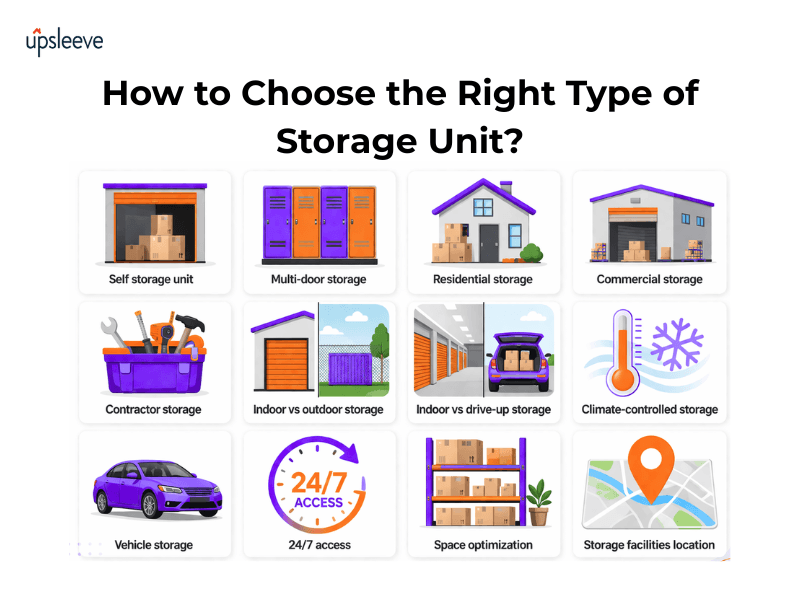
To choose the right type of storage unit, evaluate your storage needs, select the correct size, and compare important factors like location, security, cost, and available features.
The step-by-step process to choose the right storage unit is given below.
- Assess What You Plan to Store: Create a detailed inventory of all items you plan to place in self storage, including furniture, appliances, and boxes, to accurately estimate space requirements.
- Estimate the Right Size Storage Unit: Compare the volume of your belongings with available self storage unit sizes, ranging from small lockers to large units that can hold an entire household.
- Consider Vertical Space and Ceiling Height: Use the full height of your self storage unit, including stacking and shelving, to maximize space efficiency and improve organization.
- Choose a Convenient Location: Select a self storage facility close to your home or workplace to make frequent access easier and reduce travel time.
- Evaluate Security Features: Check security measures in self storage such as gated access, CCTV surveillance, keypad entry, and on-site staff to ensure item safety.
- Compare Cost and Rental Terms: Review pricing, fees, and rental conditions of self storage units to find a cost-effective option that matches your budget and storage duration.
- Check Additional Features and Amenities: Look for added features in self storage like climate control, drive-up access, lighting, and shelving to better protect and organize your belongings.
Following the steps above enables you to carefully evaluate your needs and preferences and confidently choose the right self storage unit that best fits your items, budget, and convenience requirements.
What Is a Self Storage Unit?
A self-storage unit is a rented, secure space within a storage facility where individuals or businesses can store personal belongings, inventory, vehicles, or equipment for short-term or long-term use. These storage units come in different sizes and features, allowing customers to choose storage that fits their needs, whether for household items, business supplies, or seasonal belongings.
What Is a Multi-Door Storage Unit?
A multi-door storage unit is a type of storage space designed with two or more entry doors to improve accessibility and convenience when storing or retrieving items. Storage units with roll-up doors often include double-door configurations that provide wider entry points, making it easier to move large furniture, equipment, or multiple boxes. Additional doors can also increase natural light and ventilation inside the unit, which helps improve visibility and airflow during loading and unloading.
What Is Residential Storage?
Residential storage is a type of self-storage unit designed for individuals and families to store personal belongings outside of their primary living space. These storage units can hold furniture, seasonal items, clothing, sports equipment, and other household goods. Many residential storage options include climate-controlled spaces, ensuring sensitive items such as electronics, documents, and wooden furniture remain protected while personal belongings are stored safely and conveniently.
What Is Commercial Storage?
Commercial storage is a type of storage solution designed for businesses to securely store inventory, equipment, and supplies outside of their main workspace. It provides flexible warehouse space to manage stock, support business operations, and store items essential to company functions. Commercial storage helps businesses organize inventory efficiently while keeping valuable assets safe and accessible.
What Is Contractor Storage?
Contractor storage is a specialized storage solution for construction professionals, contractors, and tradespeople to securely store tools such as drills, saws, and wrenches, equipment such as ladders and power tools, and materials such as pipes, wood, cement, and hardware supplies. Common items stored in contractor storage include power tools, ladders, building supplies, and job-site equipment. Contractor storage units typically range in size from 5’x5′ to 5’x10′, providing flexibility for different project needs. Types of contractor storage include portable storage containers, on-site units, and warehouse storage, offering secure commercial-grade self-storage units that enhance organization and maximize space utilization for efficient project management.
What Is the Difference Between Indoor and Outdoor Storage?
The difference between indoor and outdoor storage is that indoor storage units are located inside buildings, protecting items from weather, dust, and temperature fluctuations, while outdoor storage units are accessible directly from outside and expose items to environmental elements. Indoor units generally offer higher security with controlled access, surveillance, and on-site staff, whereas outdoor units may have fewer security measures. Outdoor storage allows convenient drive-up access for easy loading and unloading, while indoor units may require navigating elevators or hallways. Outdoor storage is more affordable than indoor storage, due to its enhanced protection and higher level of security. Indoor storage is best suited for sensitive items like electronics, documents, and furniture, whereas outdoor storage works well for vehicles, bulky items, and industrial equipment.
What Is the Difference Between Indoor and Drive-Up Storage?
The difference between indoor and drive-up storage is that indoor storage units are located inside a building, offering better protection from weather, dust, and temperature fluctuations, while drive-up storage units are accessible directly from outside, allowing vehicles to pull up to the unit for easy loading and unloading. Indoor storage typically provides higher security with controlled entry and surveillance, whereas drive-up units often have basic security features. Indoor units are best suited for sensitive or valuable items like electronics and important documents, while drive-up storage is ideal for bulky, heavy, or frequently accessed belongings.
Is Climate-Controlled Storage Worth It?
Yes, climate-controlled storage is worth it because it protects sensitive items from temperature fluctuations and environmental damage, ensuring long-term preservation of valuables like electronics, artwork, antiques, and important documents. These climate controlled storage units maintain an average temperature range of 55 to 80 degrees year-round, preventing warping, cracking, mold, and mildew.
Can I Store My Vehicle in a Storage Unit?
Yes, you can store your vehicle in a storage unit, including cars, motorcycles, and smaller boats or RVs. Vehicles can typically be stored for weeks, months, or even years, depending on your needs and the facility’s policies. A 20-foot vehicle storage unit or a 10×20 storage unit provides enough space for the vehicle itself, along with additional room for accessories or maintenance equipment.
Can I Access My Storage Unit at Any Time?
Yes, you can access your storage unit at any time at some facilities, but access hours vary by location. Many storage facilities offer 24/7 access, though some have restricted hours, so it is important to confirm the specific schedule with your storage provider before renting.
How Can I Maximize Space in My Storage Unit?
You can maximize space in your storage unit by following the tips given below.
- Use Vertical Space: Stack boxes and furniture safely to take advantage of tall ceilings and open floor space.
- Disassemble Large Items: Break down beds, tables, and shelving to reduce bulk and save space.
- Use Uniform Boxes: Standard-sized boxes stack neatly and make organizing easier.
- Label Everything Clearly: Label boxes on multiple sides to quickly identify contents without unpacking.
- Store Items Inside Furniture: Use drawers, cabinets, and suitcases to store smaller items efficiently.
- Keep an Aisle for Access: Leave a small walkway so you can reach items at the back without unpacking the entire unit.
- Use Shelving Units: Add freestanding shelves to organize items off the floor and maximize cubic space.
- Vacuum-Seal Soft Items: Compress clothing, bedding, and linens to reduce volume and fit more into your unit.
Where Can I Find Different Types of Storage Facilities?
You can find different types of storage facilities by searching online, using local directories, or visiting storage company websites to compare sizes, features, and pricing. You can choose Upsleeve, which is one of the best storage facilities and provides a wide range of storage solutions for a wide range of needs, including household items, vehicles, business inventory, seasonal belongings, and specialty items like wine or climate-sensitive goods, making it easy to find the right unit for your requirements.

Learn how much movers cost in the UAE, including pricing factors, apartment size, distance, services included, and tips to plan your moving budget.
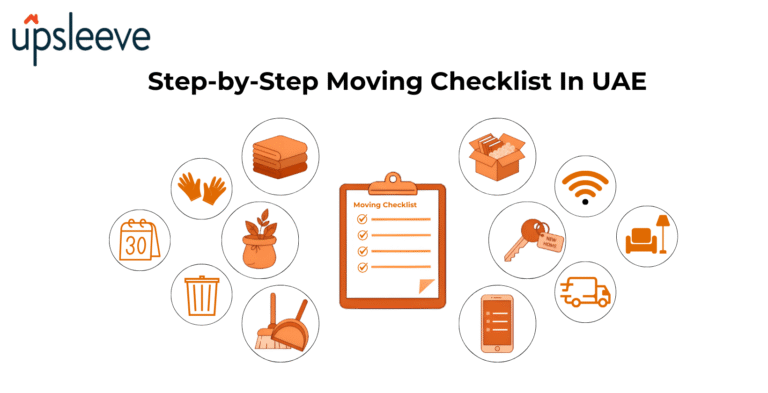
Use a complete moving out checklist to plan, pack, notify utilities, clean, inspect your property, avoid delays, and ensure a smooth, stress-free move.
Learn what relocation means in the UAE, its main types, costs, and a clear step-by-step guide to relocate smoothly with legal, housing, and moving tips.

Discover 12 benefits of hiring professional movers and packers in the UAE, including safe packing, faster moves, cost savings, insurance, and stress-free relocation.
Ready to Move?
Get Your Free Quote
Today
We make moving simple, safe, and stress-free. Our professional team handles everything from packing to delivery with care and precision.
- Professional packing & unpacking services
- Fully insured and licensed movers
- Same-day & next-day availability
- Free, no-obligation estimates
Request a Quote
Fill out the form below and we’ll get back to you as early as possible.