
Top 8 Tips to Unpack After Moving
Table of Contents
- 1. Purge Before and After the Move
- 2. Start With Essentials
- 3. Map Out Your New Home
- 4. Unpack Room by Room (Work in Zones)
- 5. Break Down Boxes and Organize Waste
- 6. Assemble and Arrange Furniture Strategically
- 7. Take Your Time and Pace Yourself
- 8. Get Help and Keep Kids Occupied
- How Long Does It Take to Fully Unpack After Moving?
- Ready to Move? Get Your Free Quote Today
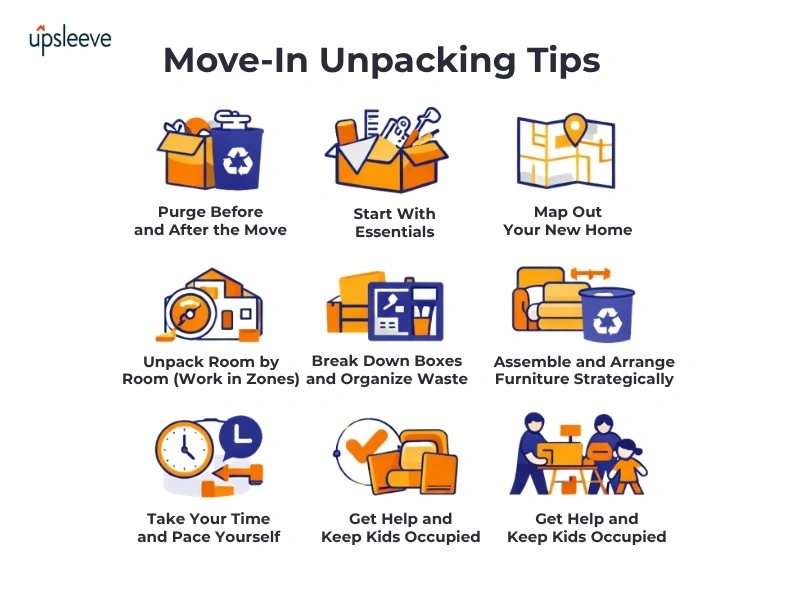
The top 8 tips to unpack after moving are given below.
- Purge Before and After the Move
- Start With Essentials
- Map Out Your New Home
- Unpack Room by Room (Work in Zones)
- Break Down Boxes and Organize Waste
- Assemble and Arrange Furniture Strategically
- Take Your Time and Pace Yourself
- Get Help and Keep Kids Occupied
Strategic planning, organizing, and unpacking save time, reduce stress, and help you set up a functional home quickly. A clear plan lets you place every item in its proper spot and prevents clutter from piling up. Using an unpacking checklist and simple home organization tips keeps the process organized, making it easier to settle in comfortably. Decluttering as you unpack simplifies your space, so your new home feels orderly and manageable from the very first day.
1. Purge Before and After the Move
Purge items before and after moving so you do not carry unnecessary clutter into your new space. Sort belongings efficiently, tackling one room at a time, and separate everything into keep, sell, recycle, and donate categories. Focus on donating items that are still in good condition instead of storing or transporting them without purpose. This organized purging process reduces the number of boxes, minimizes moving clutter, and can even lower moving costs.
2. Start With Essentials
Locate your clearly labeled essentials box and place it in a central, easy-to-access area. Sort the items by room and immediately carry toiletries and medications to the bathroom, a set of clothes to the bedrooms, chargers to nearby outlets, and basic kitchen supplies to the kitchen. Open only these priority items first and set them up in their designated spots, place toiletries in cabinets, plug in chargers, and arrange a few necessary dishes and utensils. You should keep overnight bags within reach and leave non-essential boxes sealed until these core areas are fully functional.
3. Map Out Your New Home
Look over the floor plan and think about your daily routines, where you will drop your keys, how you will move between the kitchen and dining area, or which side of the bedroom feels most comfortable for the bed. The goal is to create a layout that feels natural instead of forced.
Larger furniture should be positioned first, keeping traffic flow, natural light, and outlet access in mind. It becomes easier to decide where smaller items belong once your main pieces are settled. You can direct boxes straight to their assigned rooms rather than piling everything in one spot. Sticky notes or simple labels inside cabinets and drawers help you stay clear about where dishes, cookware, and pantry items should go. You can divide closet space by clothing type to avoid reorganizing later.
4. Unpack Room by Room (Work in Zones)
Tackle the move with a zone-based unpacking strategy, focusing on one room at a time. Start with high-priority areas like the kitchen, where essentials such as dishes, cookware, and pantry items allow meals to be prepared immediately. Move to the bedrooms and bathrooms after setting up the kitchen, unpacking bedding, clothing, and personal items first, so everyone has a comfortable space to rest and refresh. You can focus on living spaces, home offices, and storage areas once critical rooms are set.
5. Break Down Boxes and Organize Waste
Keep a box cutter accessible on each floor so you can break down each moving box by cutting along the taped seams as soon as it arrives. Once a box is empty, you can move it to a designated recycling area. Flatten the cardboard so it takes up less space and is easier to carry. Set up separate areas for recycling, donations, and trash so you can manage waste immediately instead of letting it pile up. You should sort items while unpacking, like place anything you no longer need into a clear donation box, and the things you plan to keep separate.
6. Assemble and Arrange Furniture Strategically
Place large items like beds, sofas, and tables near the spots where they will stay. Make sure you leave enough space around each piece to move safely and work comfortably. Use furniture sliders under heavy pieces to make shifting them easier and protect your floors from scratches.
Next, sort all hardware like screws, bolts, and brackets into small containers or trays so you can find everything quickly. Lay out the furniture parts in the order you will assemble them, keeping your tools close at hand. Step by step, assemble your furniture and position partially assembled items near their final location so you can slide them into place without lifting the entire piece. Use furniture sliders on heavy pieces like sofas, dressers, and tables to make moving safer and protect floors from scratches. Planning each piece’s location helps with arranging new home furniture smoothly, reduces stress, and allows rooms to feel complete quickly.
7. Take Your Time and Pace Yourself
Focus on unpacking at your pace rather than rushing through every box. You can begin with the essentials first strategy, bringing out toiletries, a few changes of clothes, and key kitchen items, so your most-used spaces are immediately functional. Once you have put the essential items in place, follow a gradual unpacking process for the remaining items. Sort boxes by room or category and place each item in its intended spot, using labeled drawers, shelves, or bins when necessary. Move from room to room at a comfortable pace, taking breaks when needed. This method not only provides efficient unpacking tips but also helps you manage moving stress and supports burnout prevention.
| City | Average Piano Moving Cost |
|---|---|
| Dubai | AED 800 to AED 1,800+ |
| Sharjah | AED 550 to AED 2,400+ |
| Ras Al Khaimah | AED 200 to AED 500+ |
| Abu Dhabi | AED 500 to AED 1,500+ |
Planning a Move? Let the Experts Handle It
From home moves to office relocations, our professional movers ensure safe packing, timely transport, and stress-free moving. Get expert help today.
Get a Free Moving Quote8. Get Help and Keep Kids Occupied
Invite friends, family, or hire helpers for moving day so you can share the workload and speed up unpacking. Assign specific tasks or rooms to each helper before you begin, so everyone knows their role and the process stays organized. You can ask the children to sort toys, arrange books, or carry lightweight items to their designated spots to make it fun to keep them engaged. Limit the use of electronics such as the TV, gaming consoles, or computers until most unpacking is complete. This reduces distractions, keeps everyone focused, and helps the team work efficiently.
You can make this unpacking process smooth and organized by hiring professionals like Upsleeve who provide reliable and efficient packing and unpacking services. They have trained teams to carefully unpack belongings, unlabel boxes by room, and set up essentials in the new home.
How Long Does It Take to Fully Unpack After Moving?
It takes 7 to 21 days to fully unpack after moving, though the timeline can range from just a few days for small apartments to over a month for larger homes. The total unpacking time depends on factors such as the size of the home, the number of belongings, how organized items are before the move, and whether you have help unpacking.
Applying strategies like the essentials-first strategy and zone-based unpacking, and working one room at a time, can significantly reduce the time needed. Clearly label boxes for each room and use a checklist to track progress, so nothing is overlooked. Following these tips for unpacking after a move streamlines the process and prevents repeated work, making even larger moves manageable and more efficient.
What Is the 5-5-5 Rule for Decluttering?
The 5-5-5 decluttering method is a simple way to decide whether to keep or discard items during a move. Ask yourself three questions, have you used the item in the last 5 months, will you use it in the next 5 months, and does it spark joy for the next 5 years? Items that fail these tests can be discarded as unnecessary items, helping you focus on what truly matters.
This rule is effective for reducing clutter and making the unpacking process easier. You apply it during unpacking to make sure you only bring essential or meaningful belongings into your new home. You can combine the 5-5-5 decluttering method with room-by-room planning to align with home organization rules and create a structured approach, making unpacking less overwhelming and more efficient.
What Is the Hardest Age to Move?
The hardest age to move is between 12 and 14, during early adolescence and middle school. Children in this age range experience stress from leaving established friends and social networks while also navigating significant emotional and physical changes. Teenagers may resist change due to strong social and emotional ties, making relocation particularly challenging.
Adults can also face moving challenges by age, as established routines and responsibilities make relocation physically and emotionally taxing. Older adults may experience senior moving difficulties related to mobility, health, or attachment to long-time possessions. Using relocation tips such as careful planning, involving all family members in decisions, and adopting a gradual unpacking approach can ease the transition for every age group. Planning and support help reduce stress, foster adjustment, and make the move smoother for children, teens, and adults alike.
Where Can You Take Unpacking and Organizing Help?
You can take unpacking and organizing help from movers like Upsleeve, a professional service designed to make your move smoother and more efficient. Their team provides expert unpacking and organizing help, handling everything from setting up essentials to arranging furniture and organizing belongings room by room.
Learn how much movers cost in the UAE, including pricing factors, apartment size, distance, services included, and tips to plan your moving budget.
Use a complete moving out checklist to plan, pack, notify utilities, clean, inspect your property, avoid delays, and ensure a smooth, stress-free move.
Learn what relocation means in the UAE, its main types, costs, and a clear step-by-step guide to relocate smoothly with legal, housing, and moving tips.

Discover 12 benefits of hiring professional movers and packers in the UAE, including safe packing, faster moves, cost savings, insurance, and stress-free relocation.
Ready to Move?
Get Your Free Quote
Today
We make moving simple, safe, and stress-free. Our professional team handles everything from packing to delivery with care and precision.
- Professional packing & unpacking services
- Fully insured and licensed movers
- Same-day & next-day availability
- Free, no-obligation estimates
Request a Quote
Fill out the form below and we’ll get back to you as early as possible.