
Learn how much movers cost in the UAE, including pricing factors, apartment size, distance, services included, and tips to plan your moving budget.
15 Tips to Pack Clothes for a Move in the UAE
Last Updated: April 1, 2026
Table of Contents
- 1. Declutter Before You Start
- 2. Sort Clothes by Category
- 3. Choose the Right Packing Methods
- 4. Use Vacuum-Sealed Bags
- 5. Keep Clothes in Dressers
- 6. Pack by Room or Person
- 7. Protect Delicate Clothing
- 8. Use Suitcases for Heavy Clothes
- 9. Do Not Mix Clean and Dirty Clothes
- 10. Pack an Essentials Bag
- 11. Label Boxes Clearly
- 12. Protect Against Moisture and Odors
- 13. Use Shoe Bags Separately
- 14. Do not Overfill Boxes
- 15. Keep Valuable or Designer Items With You
- What Supplies are Needed for Packing Clothes During a Move?
- Ready to Move? Get Your Free Quote Today
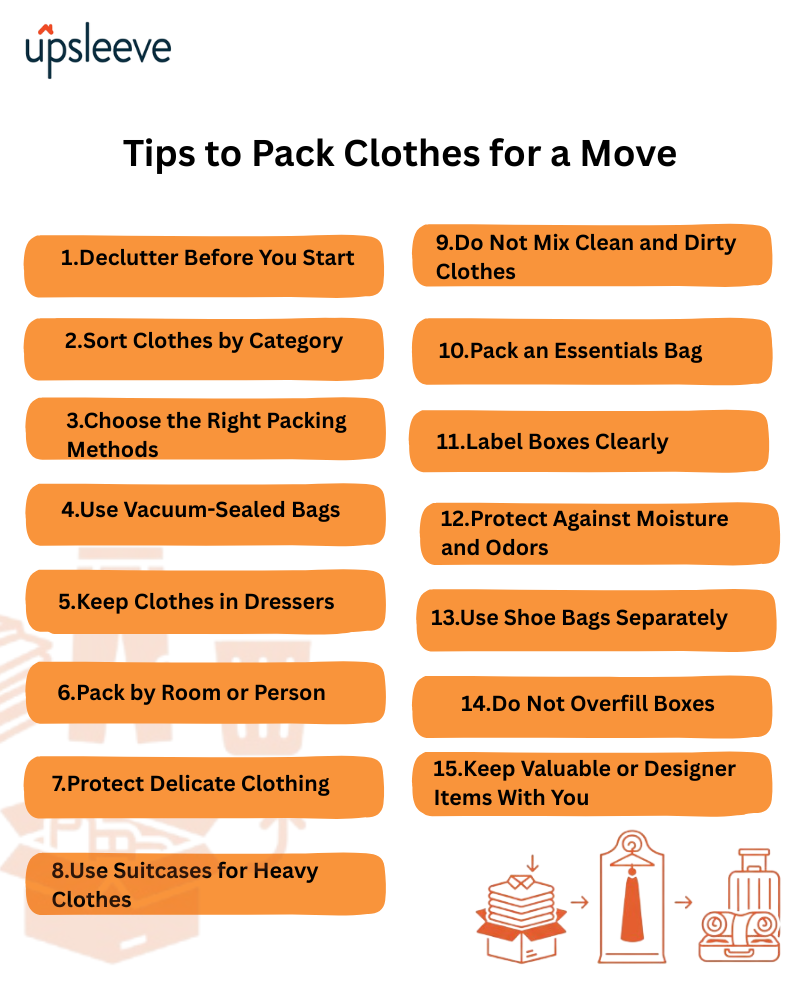
15 Tips to pack clothes for a move are given below.
- Declutter Before You Start
- Sort Clothes by Category
- Choose the Right Packing Methods
- Use Vacuum-Sealed Bags
- Keep Clothes in Dressers
- Pack by Room or Person
- Protect Delicate Clothing
- Use Suitcases for Heavy Clothes
- Do Not Mix Clean and Dirty Clothes
- Pack an Essentials Bag
- Label Boxes Clearly
- Protect Against Moisture and Odors
- Use Shoe Bags Separately
- Do Not Overfill Boxes
- Keep Valuable or Designer Items With You
Packing clothes properly is one of the most important steps in providing a smooth, organized, and damage-free move in the UAE. Proper organization affects how well your garments survive transport, how much space you save, and how quickly you can unpack at your new home. Proper packing protects delicate fabrics, designer pieces, and everyday clothing from wrinkles, moisture, and dirt, while also optimizing space and reducing moving costs.
1. Declutter Before You Start
Declutter before packing starts with a thorough clothing assessment, where you sort items into categories like keep, donate, reuse, or discard, to achieve volume reduction and lower packing time. This process works best when you pull everything out, check for wear, duplicates, and seasonal relevance, and decide what truly deserves space in your new home. Emotional attachment can make decluttering challenging, so setting aside sentimental pieces separately helps you stay focused on practicality.
2. Sort Clothes by Category
Sort clothes by category to create clear segments that make packing faster. This approach allows you to group items like shirts, pants, outerwear, formalwear, and accessories into dedicated piles to improve workflow efficiency and packing speed. Category grouping also helps you fold similar fabrics together, pack delicate items separately, and place frequently used clothing in easily accessible boxes.
3. Choose the Right Packing Methods
Choose the right packing method after evaluating each type of clothing, whether it’s structured items like jackets, soft fabrics like t-shirts, or delicate pieces like dresses. Folding works best for jackets and formalwear, rolling saves space for soft fabrics, and laying flat protects delicate items, helping you optimize space, prevent wrinkles, and keep your packing organized.
4. Use Vacuum-Sealed Bags
Use vacuum-sealed bags to maximize space when packing bulky items like winter coats, sweaters, and bedding, to fit more clothing into boxes or suitcases. Vacuum-sealed bags protect against moisture, dust, and humidity, preventing mold, odors, and fabric damage during storage or transport in the UAE’s climate.
5. Keep Clothes in Dressers
Keep clothes in dressers to reduce your packing workload, as you do not need to remove and individually pack every item. This approach prevents wrinkles and damage, while securing drawers with tape or plastic wrap provides safer transportation.
6. Pack by Room or Person
Pack clothes by room or by person in a systematic organization, to group items like each family member’s wardrobe, seasonal clothing, and accessories together. This method provides personalized sorting, keeps similar items in clearly labeled boxes or bags, and makes unpacking faster in the new home.
7. Protect Delicate Clothing
Protect delicate clothing to avoid damage such as snags, wrinkles, and discoloration during a move. Special garment care, like using padded hangers, garment bags, or tissue paper between folds, helps preserve fabrics such as silk, lace, and embellished items.
Planning a Move? Let the Experts Handle It
From home moves to office relocations, our professional movers ensure safe packing, timely transport, and stress-free moving. Get expert help today.
Get a Free Moving Quote8. Use Suitcases for Heavy Clothes
Use sturdy rolling suitcases for heavy items like winter coats, denim, and thick sweaters to prevent boxes from breaking under their weight. This approach allows for easier lifting and transport, while keeping valuable heavy garments protected from tearing, crushing, or dirt during the move.
9. Do Not Mix Clean and Dirty Clothes
Separate clean and dirty clothes to maintain hygiene by keeping freshly laundered shirts, pants, and uniforms away from worn or soiled items. This method prevents odors from transferring and reduces the risk of stains, bacteria, or other contamination during packing and transport.
10. Pack an Essentials Bag
Pack an essentials bag for immediate access to items needed in the first 24 to 48 hours after a move. This bag should include clothing, toiletries, medications, snacks, and basic kitchen items. Separate bags for kids and pets should contain toys, comfort items, and necessary food or supplies. Do not forget to add travel documents, identification, and important paperwork so you have everything you need for emergencies without unpacking all your boxes.
11. Label Boxes Clearly
Label boxes clearly by writing the room, category, and a brief description of contents on each side of the box. Moving boxes can be organized with color-coded stickers for different rooms or family members. Fragile items should be marked with bold symbols, and each box can be numbered to match an inventory list if needed.
12. Protect Against Moisture and Odors
Protect clothes against moisture and odors by using airtight containers, vacuum-sealed bags, or garment bags to shield items from humidity during the move. This also reduces the impact of heat on fabrics like cotton, wool, and silk, while controlling odors from stored or damp clothing.
13. Use Shoe Bags Separately
Use individual shoe bags for each pair of footwear, such as sneakers, heels, and boots, to prevent dirt, dust, or polish from spilling onto clothes or other items. This approach protects delicate materials like suede, leather, and satin, and keeps footwear organized.
14. Do not Overfill Boxes
Do not overfill boxes to prevent them from bulging, tearing, or collapsing under the weight of packed clothes. Each box should be kept to a manageable weight to support mover safety by reducing lifting strain, and make the boxes easier to carry, stack, and unload without causing delays or accidents during the move.
15. Keep Valuable or Designer Items With You
Keep valuable or designer clothing with you by packing it in a dedicated garment bag or carry-on suitcase to protect premium pieces like tailored suits, embroidered abayas, silk gowns, or branded outfits. This approach helps prevent loss or damage during loading and transport, especially for delicate fabrics such as silk, chiffon, lace, or cashmere, and limited-edition items like couture dresses and bespoke jackets.
What Supplies are Needed for Packing Clothes During a Move?
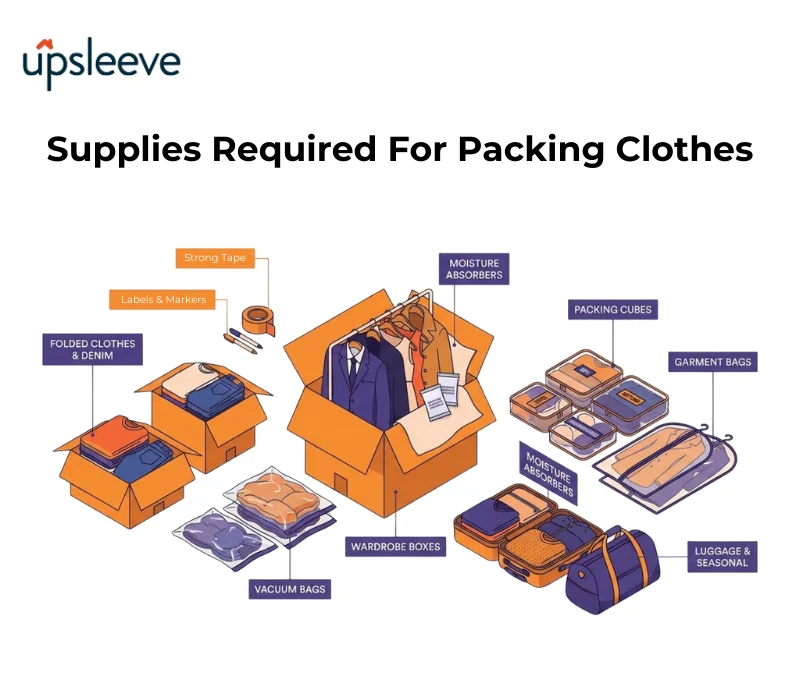
Supplies that are needed for packing clothes during a move are given below.
- Wardrobe Boxes: Keep suits, abayas, dresses, and coats hanging to prevent wrinkles.
- Medium Moving Boxes: Pack folded everyday clothing like T-shirts, jeans, and kids’ wear.
- Vacuum-Sealed Bags: Reduce bulk and protect clothes from moisture, dust, and humidity.
- Packing Cubes: Help organize items by category, such as sleepwear, gym clothes, and undergarments.
- Garment Bags: Provide extra protection for delicate or designer items like silk dresses and linen outfits.
- Suitcases & Duffel Bags: Perfect for heavy clothing such as sweaters and jackets without risking box damage.
- Soft Tissue Paper: Prevents creasing for delicate fabrics like chiffon, satin, and cashmere.
- Moisture Absorbers: Protect clothing from UAE humidity during transport or storage.
- Strong Packing Tape: Seals boxes securely to avoid accidental openings.
- Labels & Markers: Allow clear identification for easier handling, and organized packing and unpacking.
Are Boxes or Bags Better for Moving Clothes?
Boxes are generally better for moving clothes because they provide structure, protection, and easier organization. They keep garments neatly folded or hung, prevent crushing during stacking, and simplify unpacking once you reach your new home. Bags, such as duffels or vacuum-seal bags, are useful for casual or bulky items and help save space, but they offer less protection for delicate or formal wear. Using a mix of both, boxes for sensitive or structured clothing and bags for everyday items, gives the most efficient and safe packing solution.
How Do I Pack Hanging Clothes Without Wardrobe Boxes?
Pack your hanging clothes without wardrobe boxes using the steps given below.
- Sort and Group Clothes: Separate items by type or family member to keep things organized.
- Use Garbage Bags or Large Plastic Bags: Slip each garment bag over the hanging clothes, keeping hangers inside.
- Secure the Bottom: Tie or tape the bottom of the bag to prevent clothes from sliding out.
- Bundle Hangers Together: Use rubber bands or string to group hanger hooks for easier handling.
- Label Bags Clearly: Indicate the contents or the room/family member for easy unpacking.
- Transport Upright if Possible: Place bags upright in the moving truck to avoid wrinkles or crushing.
- Consider Protective Covers: Use padded garment covers or tissue paper inside the bag for delicate or designer items.
What is the Best Way to Move Clothes on Hangers?
The best way to move clothes on hangers is to use wardrobe boxes, as they allow garments to remain hanging upright, preventing wrinkles, tangling, and damage. You can cover each garment with a large plastic or garbage bag, secure the bottom, and bundle hanger hooks together, if wardrobe boxes are not available, to keep clothes organized during transport.
Do Vacuum Bags Ruin Clothing?
No, vacuum bags do not ruin clothing when used correctly. These bags are designed to compress bulky items like sweaters, jackets, and blankets to save space during moving or storage. Delicate fabrics such as silk, lace, or cashmere can develop creases or damage if left compressed for too long, so vacuum bags are best used for short-term storage and careful handling of fragile or structured garments.
How to Avoid Wrinkles on Clothes?
To avoid wrinkles on clothes, follow the tips given below.
- Use Proper Hangers: Hang delicate or wrinkle-prone clothes on sturdy hangers and place them in wardrobe boxes to keep them upright during transit.
- Garment Bags: Store suits, dresses, and other formal wear in breathable garment bags to protect them from dust and prevent folding.
- Fold Strategically: Fold heavier clothing like sweaters and jackets flat, and place tissue paper or packing paper between layers to reduce friction and creasing.
- Roll Clothes for Casual Wear: Roll t-shirts, pants, and casual garments to minimize creases and save space in moving boxes.
- Use Plastic Dry-Cleaning Bags: Cover delicate items with the plastic bags from the dry cleaner; the smooth surface helps prevent wrinkles.
- Pack Tightly, But Not Overstuffed: Fill boxes firmly to avoid shifting during transit, but avoid overpacking, which can crush clothes and cause wrinkles.
- Unpack Promptly: Remove clothes from boxes and hang them up as soon as you arrive. Steam or iron any minor wrinkles before wearing.
Which Folding Method Saves the Most Space?
The folding methods that save the most space are rolling, flat fold, KonMari, and bundle wrapping. Rolling works best for soft fabrics like t-shirts and leggings, saving room and reducing wrinkles. Flat folding is ideal for structured garments such as dress shirts, jackets, and formal pants to maintain shape. The KonMari method folds clothes into small, upright rectangles, maximizing box or drawer space while keeping items visible, and bundle wrapping compresses multiple garments around a central core without creating sharp creases, perfect for bulkier fabrics.
Is It Better to Roll or Fold Clothes in a Suitcase?
It is generally better to roll soft clothing like t-shirts, leggings, and casual wear in a suitcase, as this method saves space and minimizes wrinkles. Folding works best for structured or formal items such as dress shirts, jackets, and tailored pants to maintain their shape. Using a combination of rolling for casual items and folding for formalwear provides the most efficient and organized packing.
What Is the Best Way to Package Clothes for Shipping?
The best way to package clothes for shipping is to use sturdy, appropriately sized boxes or durable poly mailers for lightweight items. Start by selecting the right packaging materials, such as wardrobe boxes for hanging garments, medium boxes for folded clothing, and padded or waterproof bags for delicate fabrics. Roll or fold clothes carefully, using tissue paper for silk, lace, or embellished items to prevent wrinkles and damage. Vacuum-sealed bags can help reduce volume and optimize shipping costs, but avoid over-compressing delicate pieces. Finally, boxes are sealed with strong packing tape and, if necessary, use plastic liners or waterproof bags to protect against moisture, dust, and transit damage.
How Long Before a Move Should You Start Packing?
You should start packing about 4 to 6 weeks before your move to allow enough time for planning, organizing, and decluttering. Early packing helps you sort belongings, reduce volume, and schedule pickups or storage without last-minute stress. The planning phase includes assessing what to keep or donate, gathering packing supplies, labeling boxes, and creating a timeline, to prevent rushed decisions or overlooked items.
Related Articles
Use a complete moving out checklist to plan, pack, notify utilities, clean, inspect your property, avoid delays, and ensure a smooth, stress-free move.
Learn what relocation means in the UAE, its main types, costs, and a clear step-by-step guide to relocate smoothly with legal, housing, and moving tips.

Discover 12 benefits of hiring professional movers and packers in the UAE, including safe packing, faster moves, cost savings, insurance, and stress-free relocation.
Ready to Move?
Get Your Free Quote
Today
We make moving simple, safe, and stress-free. Our professional team handles everything from packing to delivery with care and precision.
- Professional packing & unpacking services
- Fully insured and licensed movers
- Same-day & next-day availability
- Free, no-obligation estimates
Request a Quote
Fill out the form below and we’ll get back to you as early as possible.